
In SituIn SituIn Situ
search
Menu
  • Home
  • About
  • Map
  • Stories
  • Top Stories
  • Contact
  • search
Press enter to begin your search
Close Search
Category

Iron Age

The Iron Age begins with the first evidence of ironworking and marks the end of prehistory (the time before written records). Society was still based around farming, but we start to see more elaborate roundhouse settlements, brochs, and hillforts as a means of displaying status and wealth, as well as various craftworking industries. In England, the Iron Age ends with the arrival of the Romans in AD 43, while in Scotland Iron Age society and culture persists throughout the Roman era.

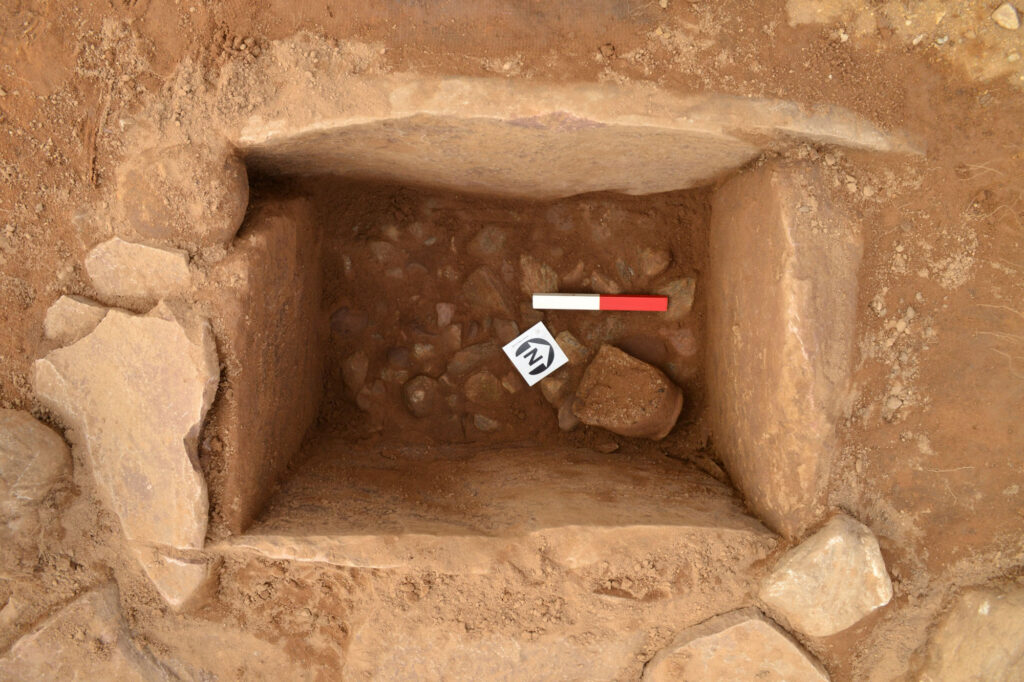
Rescue Excavation of a Western Isles Souterrain Knockaird Souterrain in a landscape settingIron Age

Rescue Excavation of a Western Isles Souterrain

For a local resident of Cnoc Ard (Knockaird) on the Isle of Lewis, a surprise…
In Situ
In Situ21 April 2025
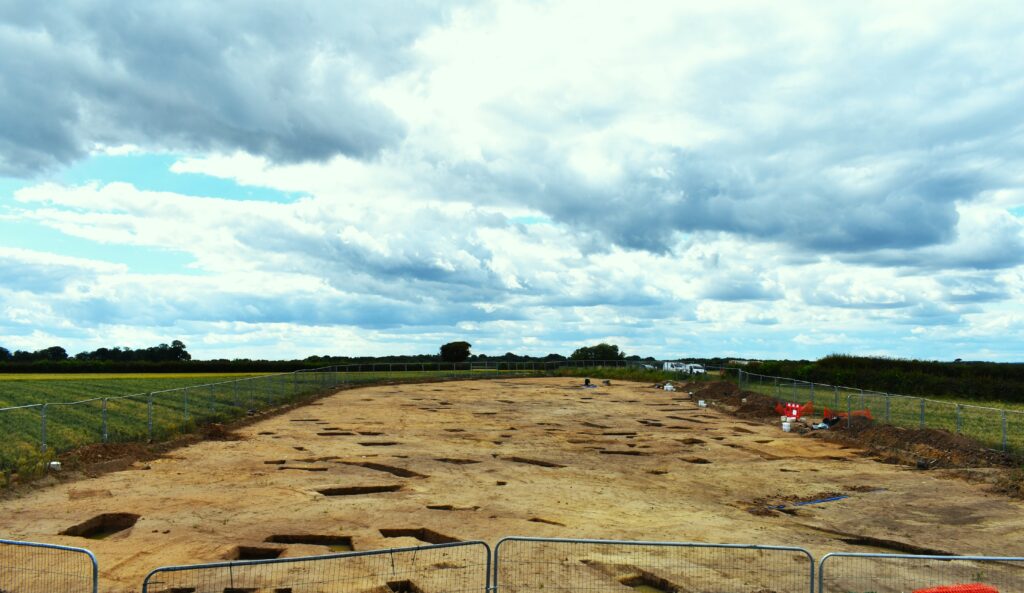
A Landscape Through Time: Brought to life through the construction of Dogger Bank Wind Farm Picture of an archaeological site during excavation with open skyEarly MedievalIron AgeMesolithicRoman

A Landscape Through Time: Brought to life through the construction of Dogger Bank Wind Farm

The Dogger Bank Wind Farm phases A and B in Yorkshire’s East Riding provided a…
In Situ
In Situ15 November 2024
Journey Through Late Prehistoric Inverness Bronze AgeIron Age

Journey Through Late Prehistoric Inverness

Recent excavations ahead of development for HMP Highland have uncovered the remains of roundhouse settlements…
In Situ
In Situ14 August 2024
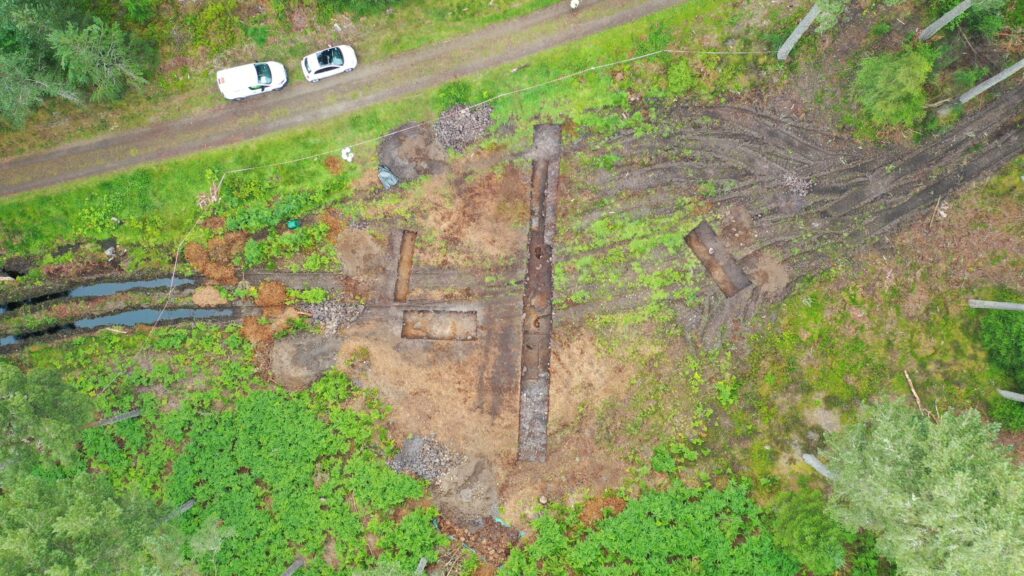
Hidden Houses: Prehistoric Settlement in Camore Wood, Dornoch Bronze AgeIron Age

Hidden Houses: Prehistoric Settlement in Camore Wood, Dornoch

Within the forestry plantation of Camore Wood, near Dornoch, a prehistoric settlement of at least…
In Situ
In Situ22 November 2023
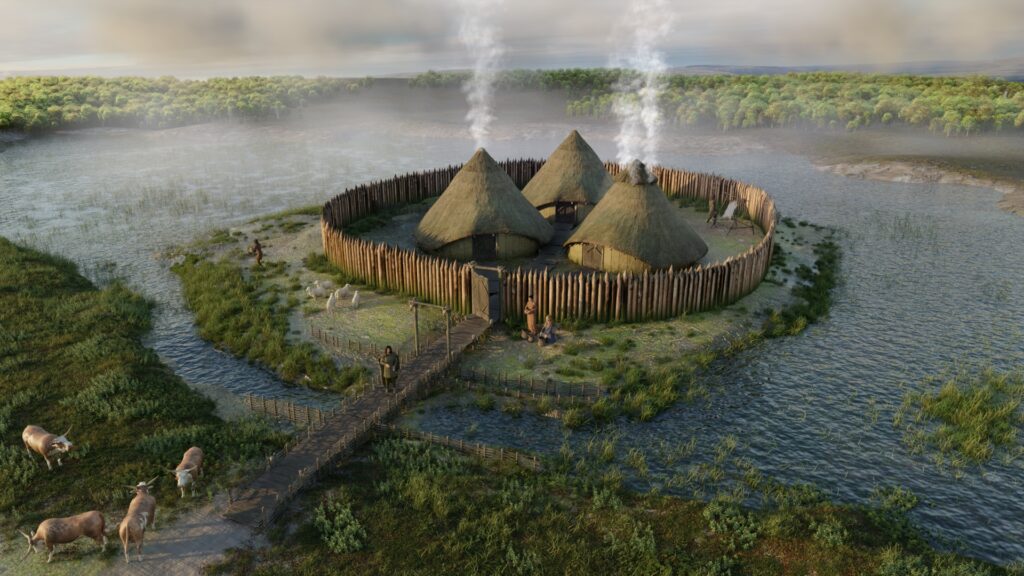
A Prehistoric Wetland Settlement in Hyndford, South Lanarkshire Iron Age

A Prehistoric Wetland Settlement in Hyndford, South Lanarkshire

Nestled within a bend in the River Clyde, archaeological monitoring works at a quarry uncovered…
In Situ
In Situ28 March 2023
3D -Printing The Past: Replica Objects from Clachtoll Broch Iron Age

3D -Printing The Past: Replica Objects from Clachtoll Broch

A selection of objects was replicated using 3D printing technology so that they can be…
In Situ
In Situ3 October 2022
A Wooden Vessel from the Cairns Broch Iron Age

A Wooden Vessel from the Cairns Broch

Since 2006, UHI Archaeology Institute has been carrying out archaeological excavations at The Cairns on…
In Situ
In Situ25 September 2022
Cracknie Souterrain: a subterranean secret Iron Age

Cracknie Souterrain: a subterranean secret

Most people don’t consider archaeology when they think about forestry. Matt Ritchie, from Forestry and…
In Situ
In Situ15 September 2022
Clachtoll Broch: an Icon of the Iron Age Iron Age

Clachtoll Broch: an Icon of the Iron Age

Clachtoll Broch stands in an imposing position on Scotland’s west coast. For 2000 years, rubble…
In Situ
In Situ6 September 2022
An Array of Everyday Artefacts from an Iron Age Home in Assynt Iron Age

An Array of Everyday Artefacts from an Iron Age Home in Assynt

Community excavations by Historic Assynt saw Clachtoll Broch fully excavated, revealing the story of a…
In Situ
In Situ20 August 2022
Dalchork, Lairg – Excavation of a Highland Roundhouse Settlement Bronze AgeIron Age

Dalchork, Lairg – Excavation of a Highland Roundhouse Settlement

On the slopes of Dalchork Forest, near Lairg in the Scottish Highlands, a group of…
In Situ
In Situ12 August 2022

© 2026 In Situ. | part of AOC Archaeology

  • twitter
  • facebook
  • instagram
Close Menu
  • Home
  • About
  • Map
  • Stories
  • Top Stories
  • Contact
  • Home
  • About
  • Map
  • Stories
  • Top Stories
  • Contact
360⁰ Virtual Tours

Immersive way of making remote heritage sites more accessible. By taking a series of 360⁰ images, or spherical panoramas, we can create virtual tours of archaeological sites and historic buildings.

UAV Survey

Drones in the heritage sector are used as a low-level aerial method of recording archaeological sites, historic buildings, tall monuments, and landscapes. Equipped with high-resolution cameras, drones can access high-level structures to facilitate the inspection of historic sites.  Accurate 3D records are generated from gathered images and used for survey, conservation, and maintenance work.

LIDAR analysis

LiDAR (Light Detection and Ranging) is a remote sensing technique, used for high-resolution survey of landscapes.
The technology is based on the use of a laser scanner, mounted on an aircraft. Laser scanners emit pulses of laser light at a rate of many hundreds of pulses per second,
and measure the time it takes for the reflection of that pulse to return to the instrument; a GPS is used to plot the coordinates of each measurement. Using this method,  computers are able to process millions of measurements in a dataset called a ‘point cloud’. In turn, this point cloud is then used to make very detailed presentations of the ground surface, called ‘digital terrain models’, often referred to as ‘DTMs’.

3D Reconstructions

Digital reconstructions allow us to visualise lost archaeological sites or piece together fragmented artefacts recovered during excavations. Particularly useful in the analysis and interpretation of fragile archaeological finds, 3D reconstructions allow specialists to examine objects in a non-invasive way and experiment with innovative methods of communicating the results of these analyses.

Based on photos, archival maps, LiDAR data or 3D scans, digital models of cultural assets can be created and experienced in the virtual world by the viewer. Those reconstructions provide a way for audiences to explore artefacts from afar and present a fascinating new opportunity for engagement with the past.

3D printing

Archaeological artefacts can provide a tangible link to people who lived centuries, or even millennia, before us. However, most are too fragile to be handled freely and are viewed behind glass or stored in archives. 3D prints of artefacts, made from highly accurate 3D models created from data gathered through digital recording methods, can provide an opportunity for a tactile experience, allowing a more personal connection. 3D printing technology is also making heritage more inclusive and accessible for people with visual impairments – dedicated handling kits are gaining more popularity across cultural institutions in the UK and beyond.

Reflectance Transformation Imaging (RTI)

Reflectance Transformation Imaging ( RTI) balances between 2D and 3D imaging. Whilst it captures 2D images, it allows for the object recorded to be digitally re-lit, creating an illusion of 3D surface. RTI dataset is created by capturing a series of images from a fixed camera position with the artefact illuminated by a light source incrementally moved around on a hemispherical grid. It records the subject’s shape and colour and is particularly useful for enhancing fine surface detail invisible under regular illumination.

Laser Scanning

Terrestrial laser scanning is one of the primary techniques that enable the rapid and highly-accurate acquisition of 3D data.

The scanners measure the 3D geometry by sending a laser beam to the surface of the recorded structure. The beam hits the surface and returns to the scanner – based on those two events the scanners can calculate distances and angles, assigning each measured point a precise location in 3D space.

Capturing millions of measurements per second,  laser scanning became one of the primary tools used in surveying due to its speed and ability to produce high-resolution data.  Laser scanned point clouds can provide valuable metric data, giving cross sections through buildings, or accurate terrain models of slight topographic features. 3D data can be processed into highly accurate CAD models for visualisation, or used to extract detailed 2D elevations and plans.

Photogrammetry

A photography-based 3D recording method using 2D images to extract 3D information. This is done by reading perspective variations and differences in lines of sight in multiple overlapping images.

Its adaptability, scalability and potential to create highly accurate 3D outputs, regardless of the size of the subject recorded, made photogrammetry a widely popular 3D recording technique.

Used in the heritage sector in a broad spectrum of applications: from creating a detailed record of archaeological sites and buildings to conservation monitoring and long-term preservation of fragile museum collections.