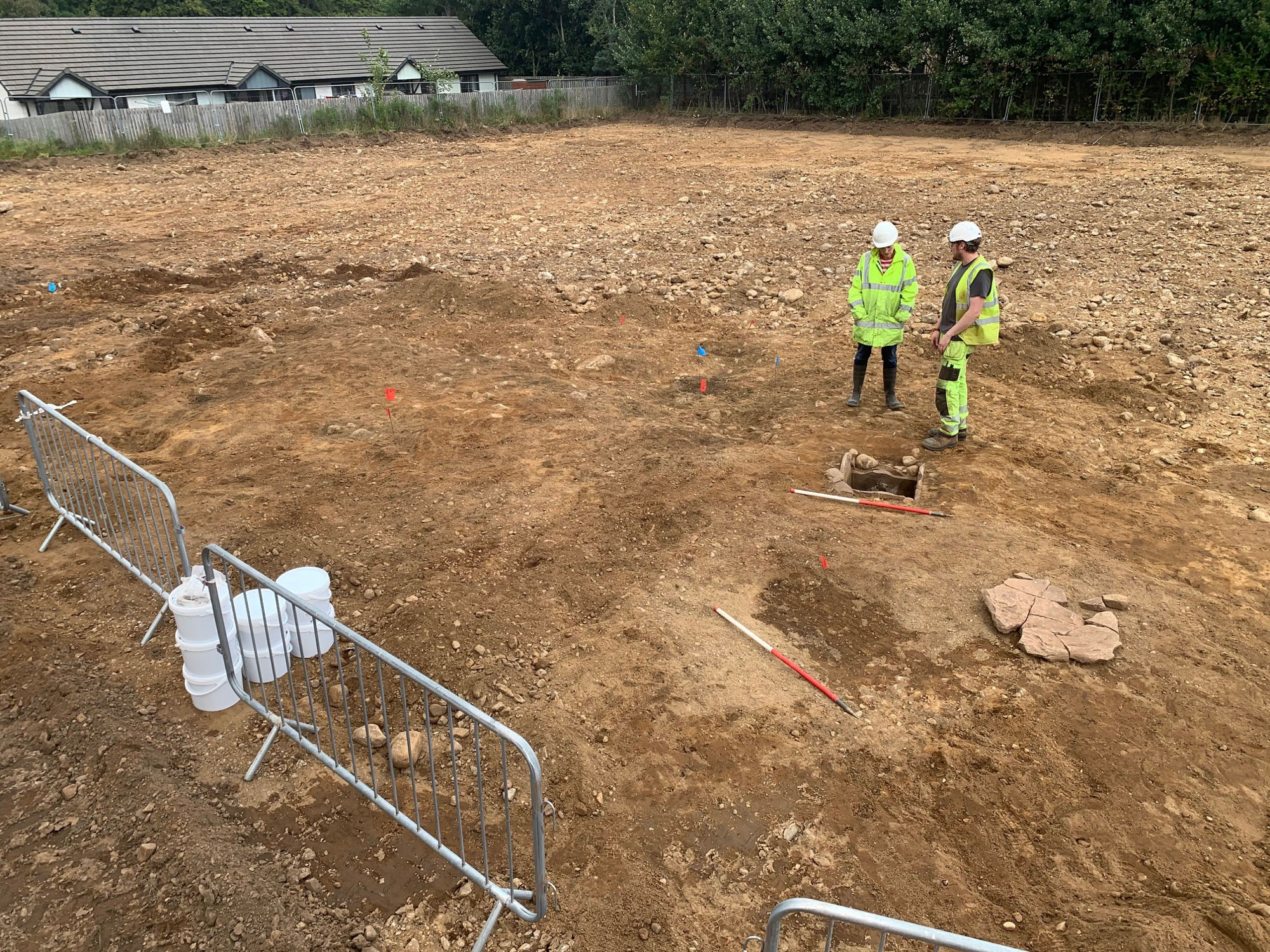


A new housing development at Lewiston on the south side of Drumnadrochit has unearthed evidence for human occupation of the landscape over the last 6,000 years. This fertile area at the junction of Glen Urquhart and Glen Coiltie has seen both settlement and funerary practices throughout prehistory, with fragments of Early Neolithic pottery, a Bronze Age cemetery and an enclosed Iron Age roundhouse.
Several phases of archaeological works have been carried out on the site between 2015 and 2023, with the most recent phase funded by Compass Building and Construction Services.
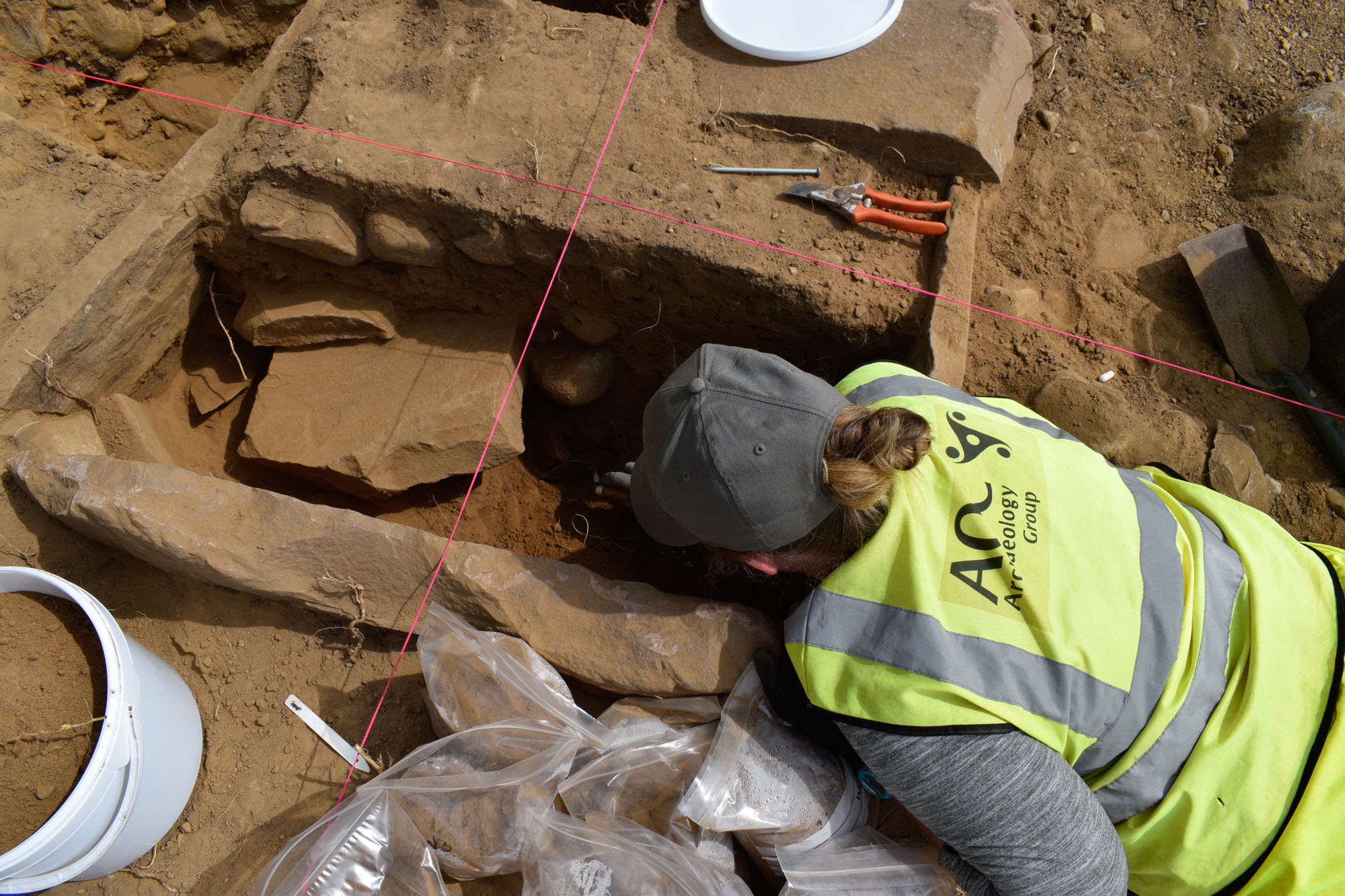
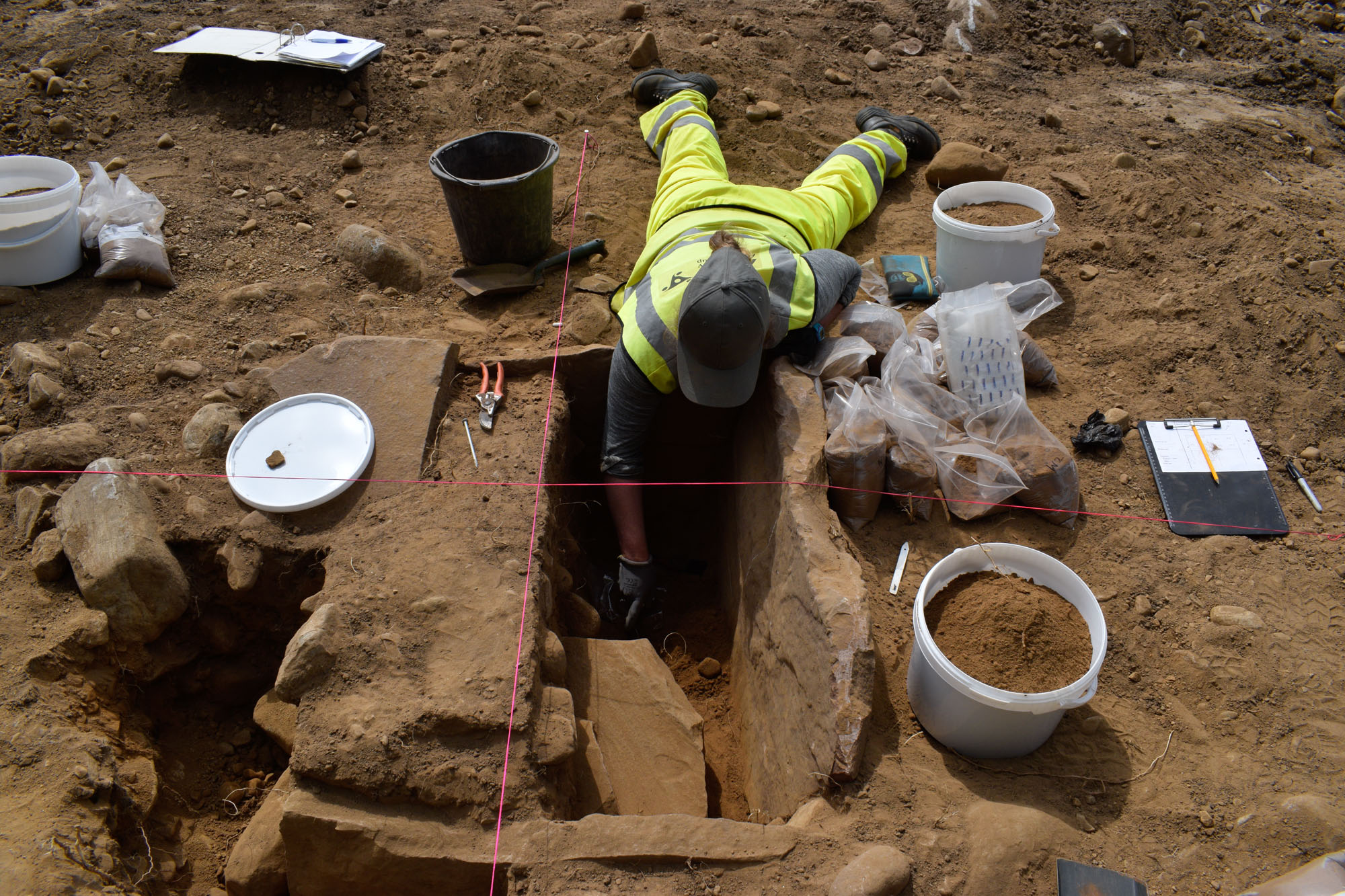
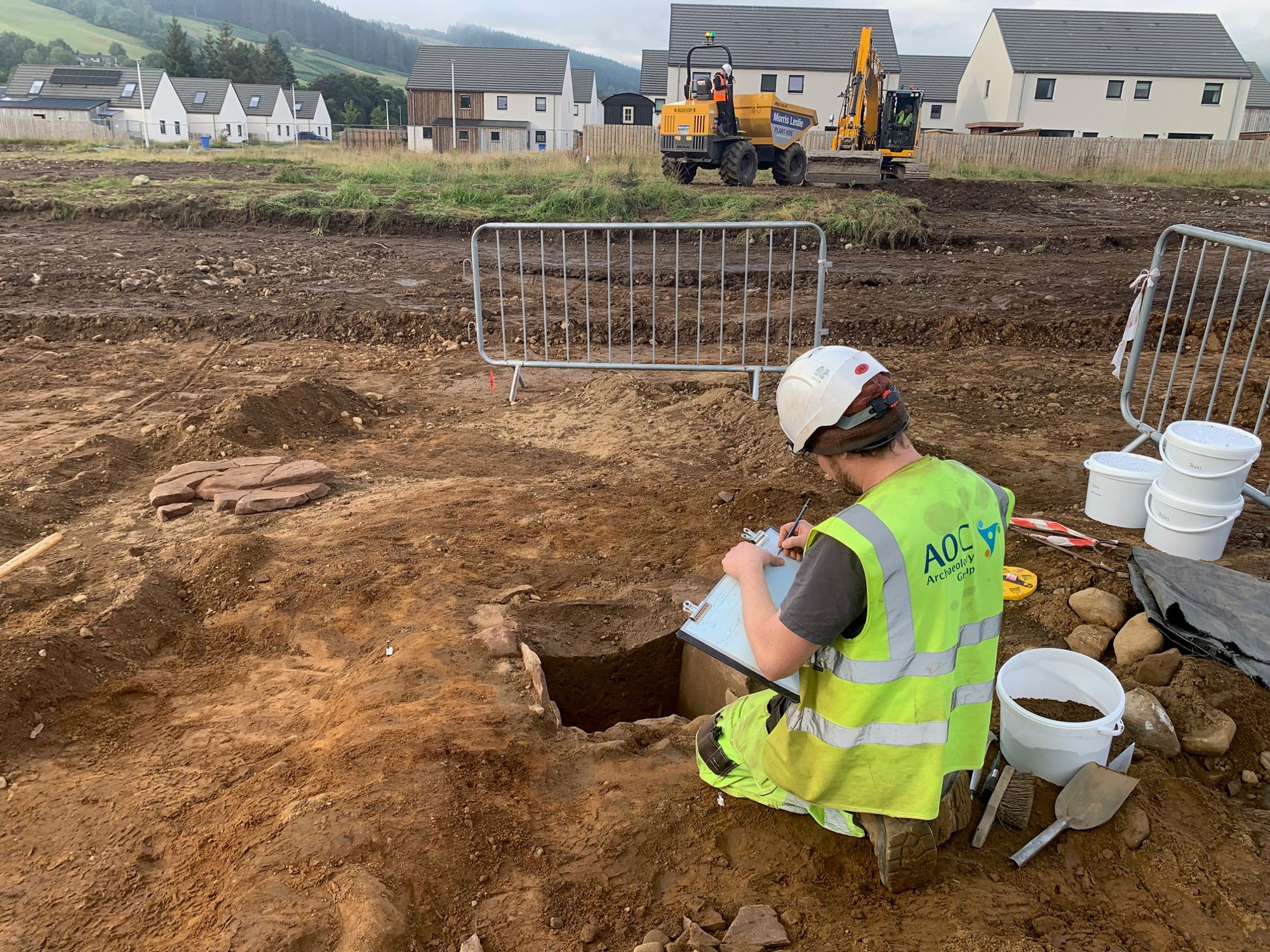
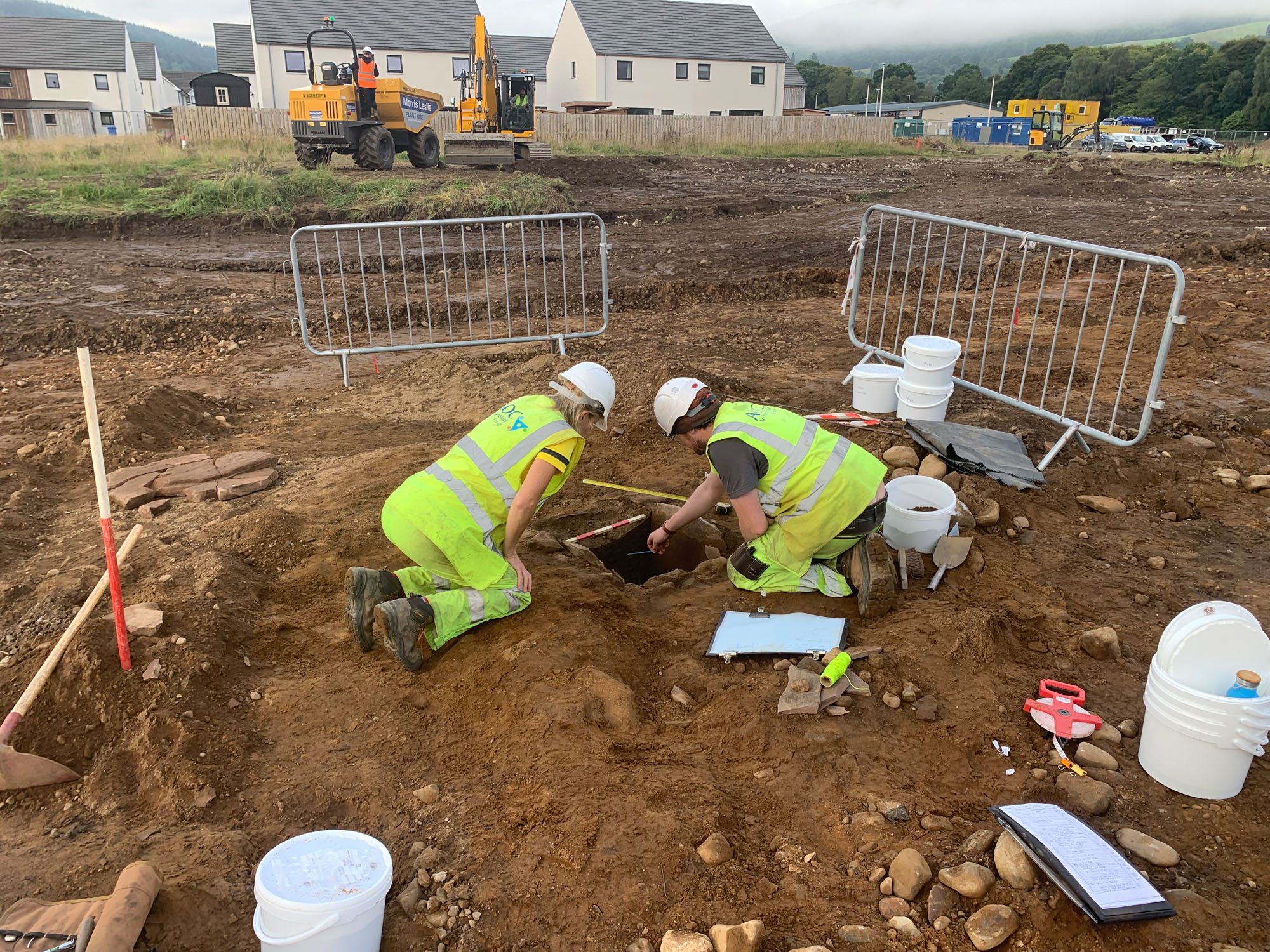
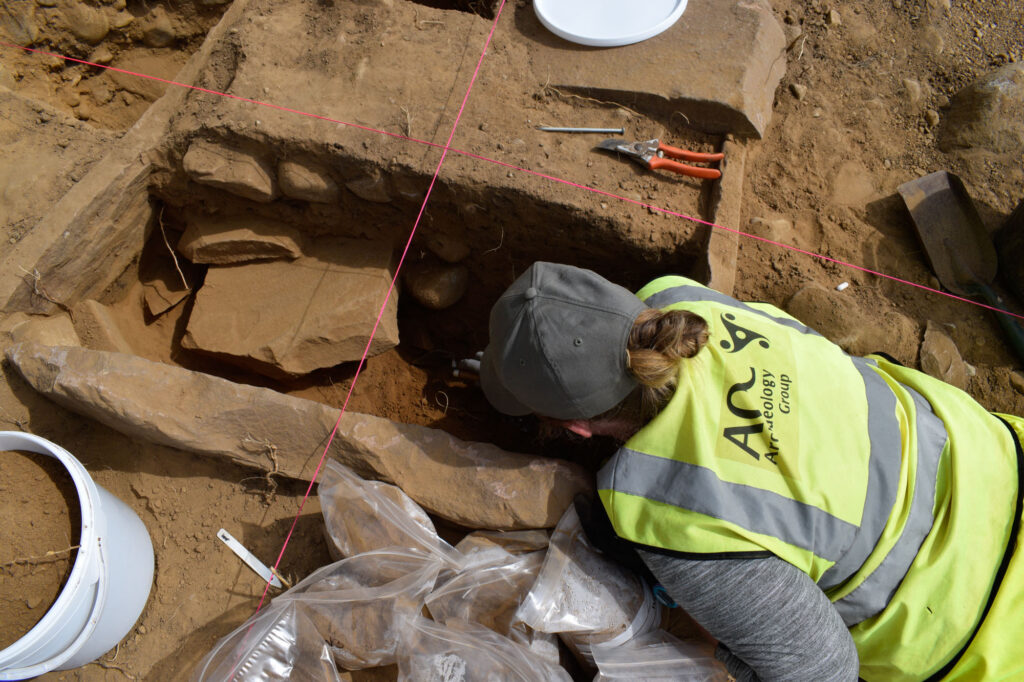
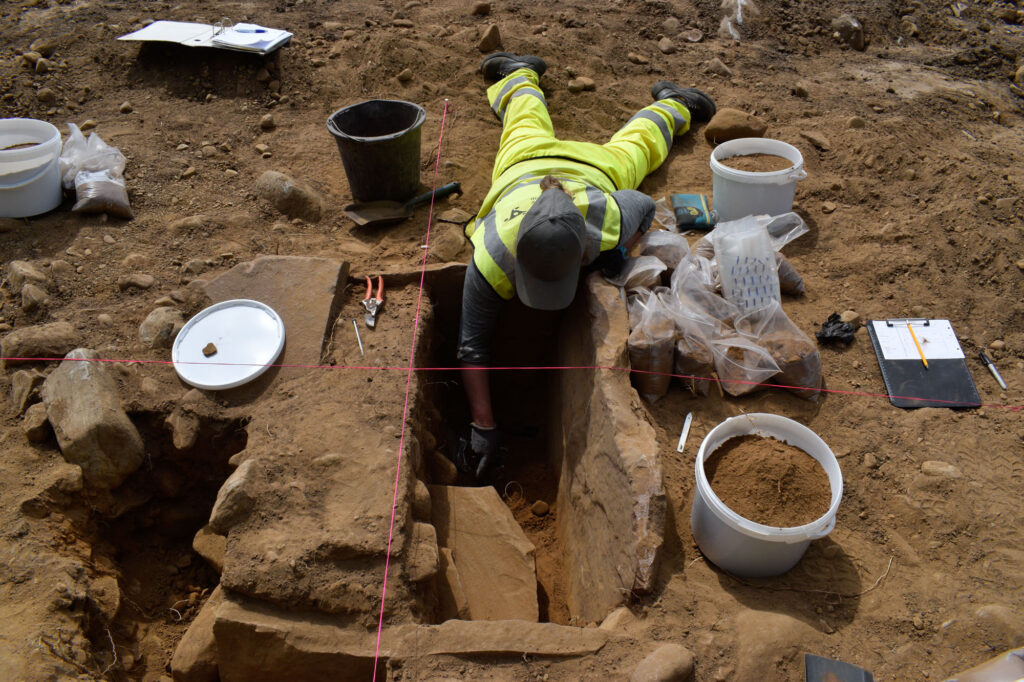
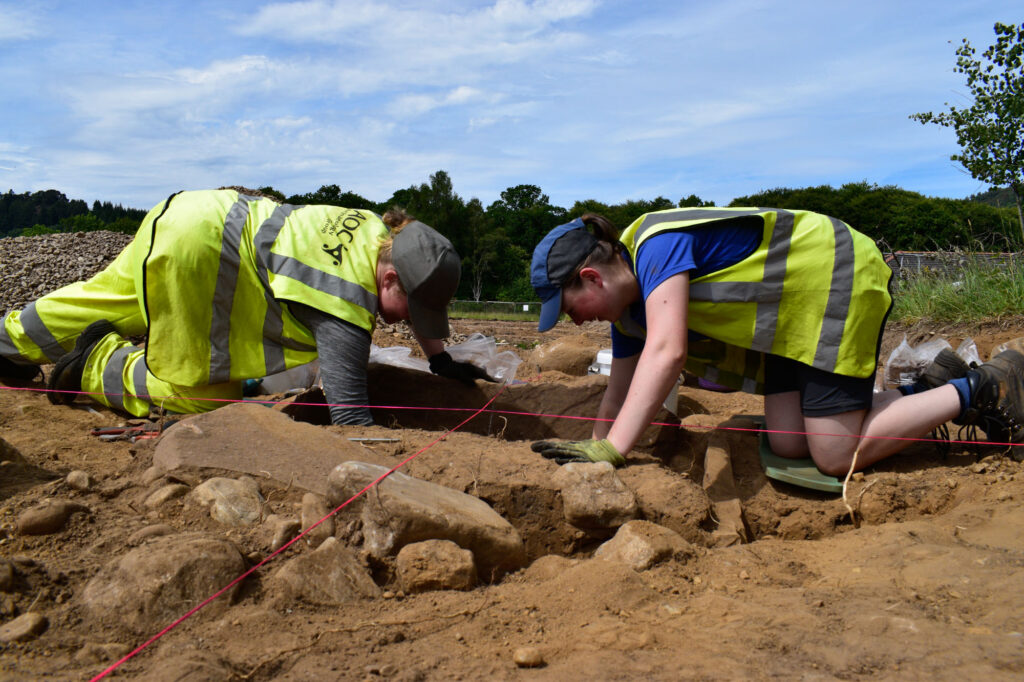
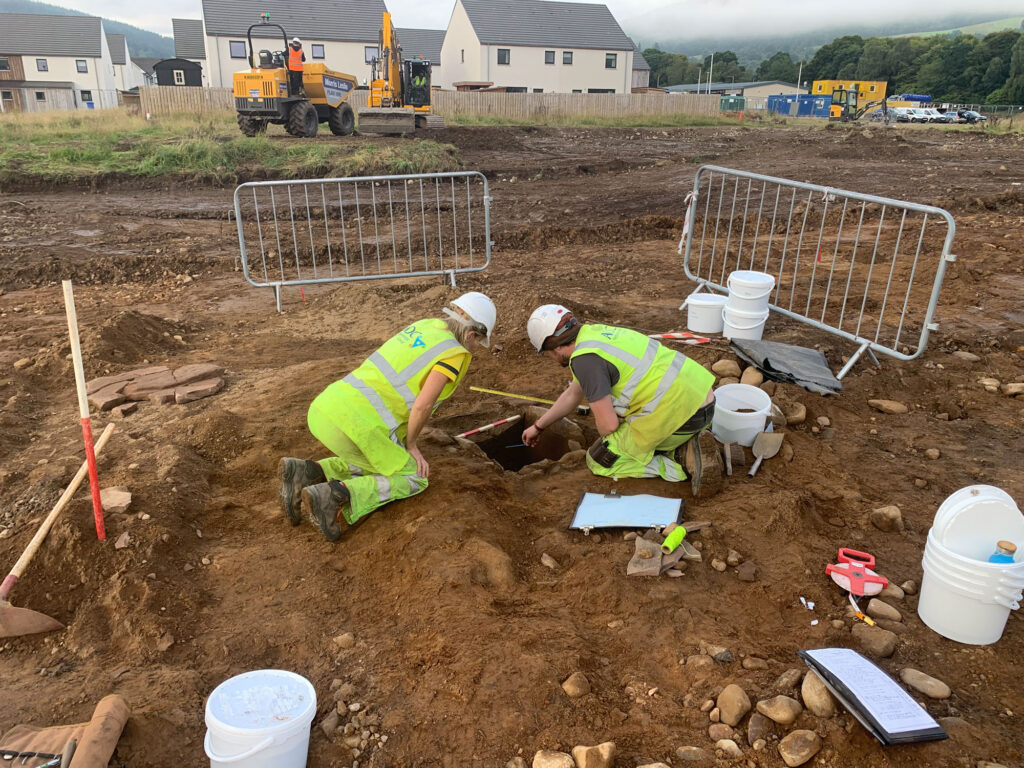
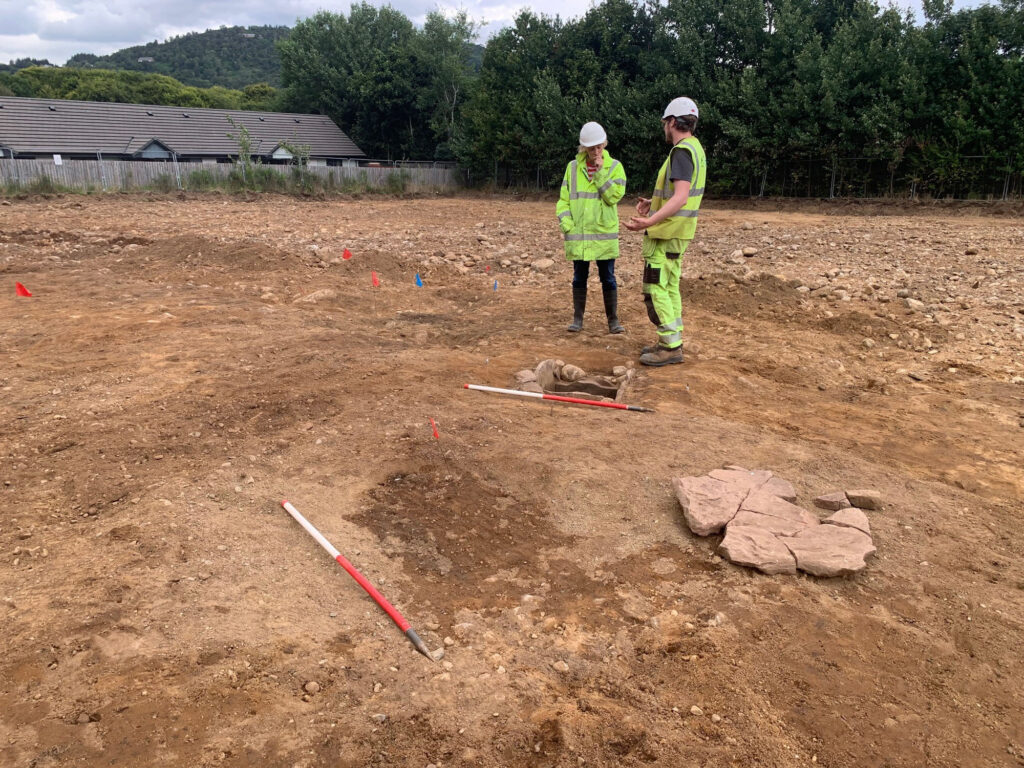
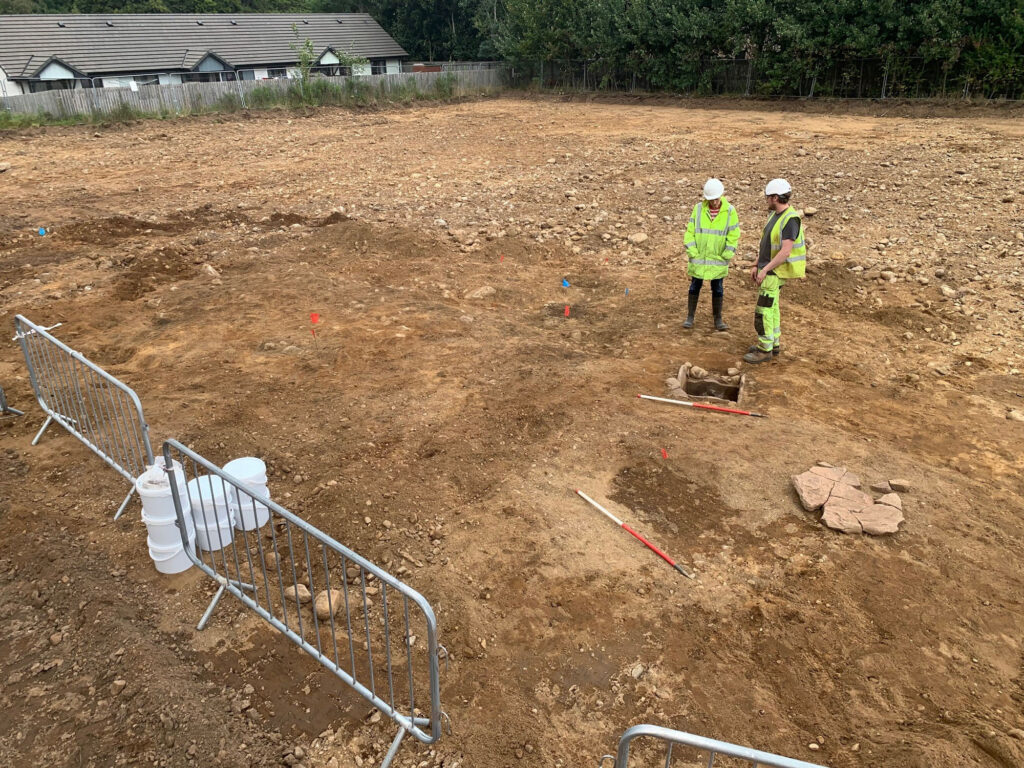
Archaeologists excavate one of the Bronze Age burials on the site
Neolithic Living
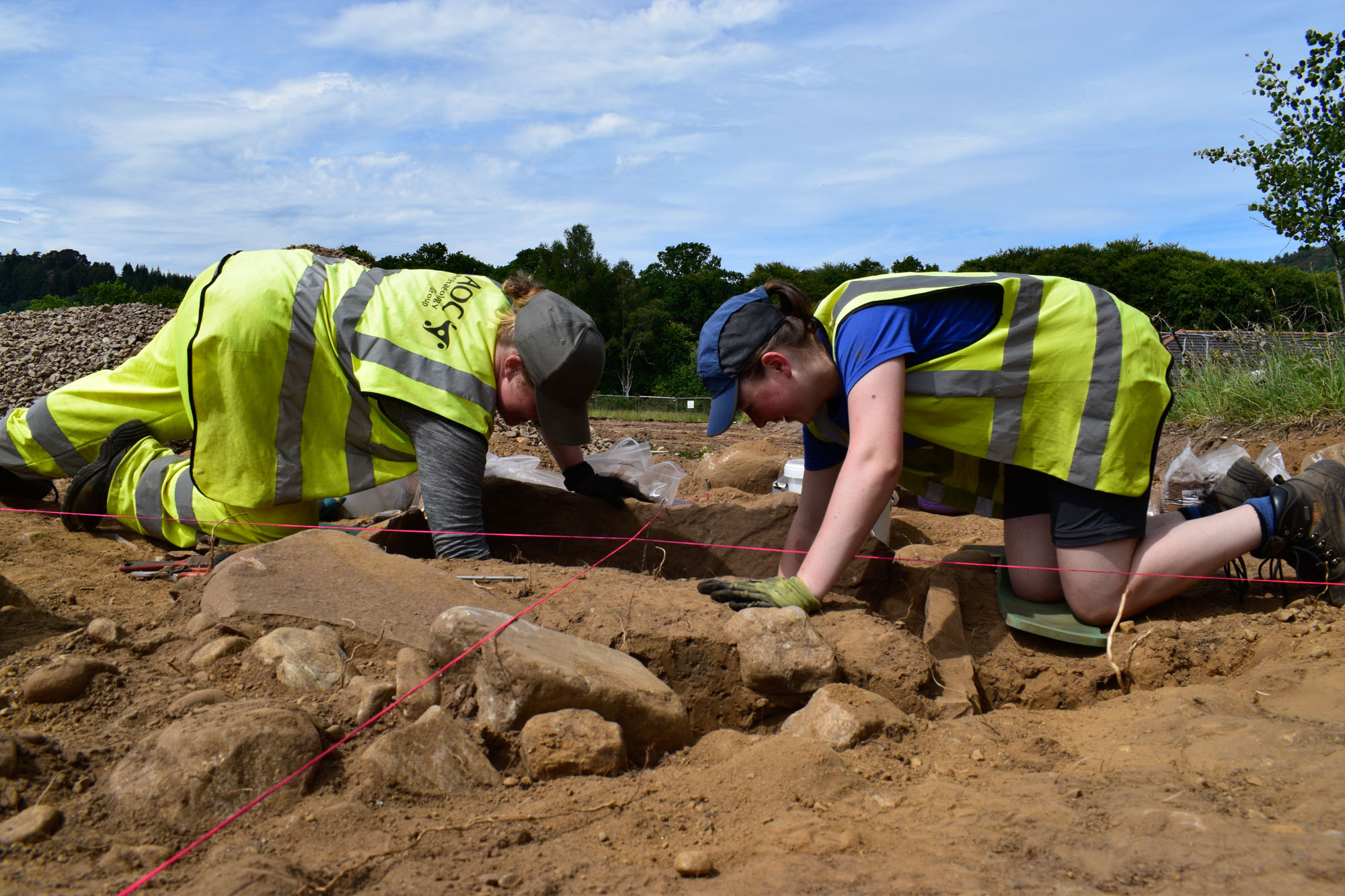
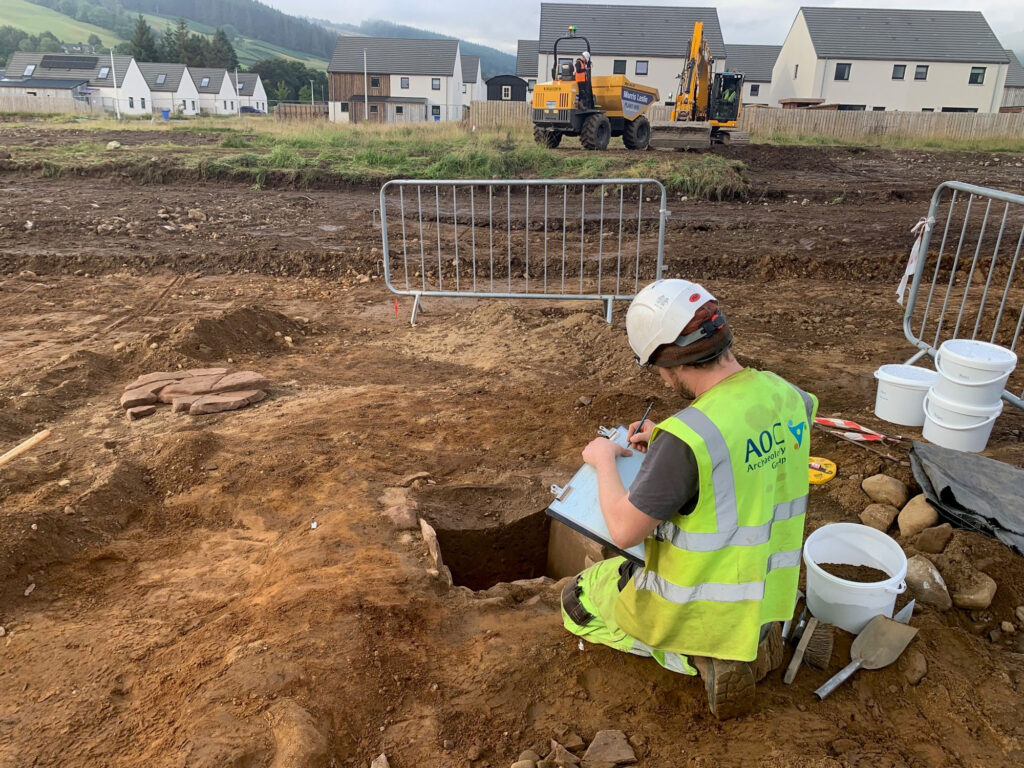
The earliest archaeological evidence uncovered on the site came from the Neolithic period, around 3,650-3,500 BC. Several small groups of pits containing burnt hazelnut shells and fragments of carinated and round-based ceramic bowls were found across the site. Pit groups such as these are common finds on prehistoric sites in the north of Scotland, though they can be difficult to interpret since they are often truncated and can be associated with a range of everyday activities.
The pits were dug and filled in a single event and contained material from activities such as food processing, cooking and craftworking. Analysis of soil samples from the pits revealed the presence of burnt hazelnut shells and cultivated cereal crops such as hulled barley and emmer or spelt wheat, providing an insight into the Neolithic diet. There is evidence that this activity took place within a single generation of people living on the site.
An archaeologist excavates a Neolithic pit group

Pottery for the People
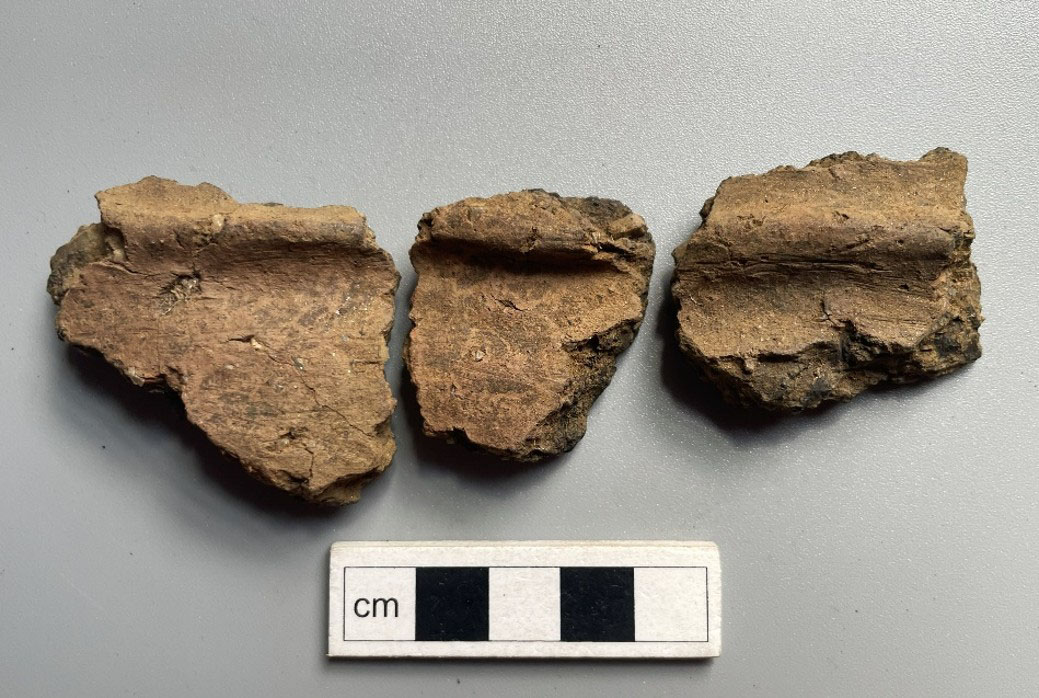
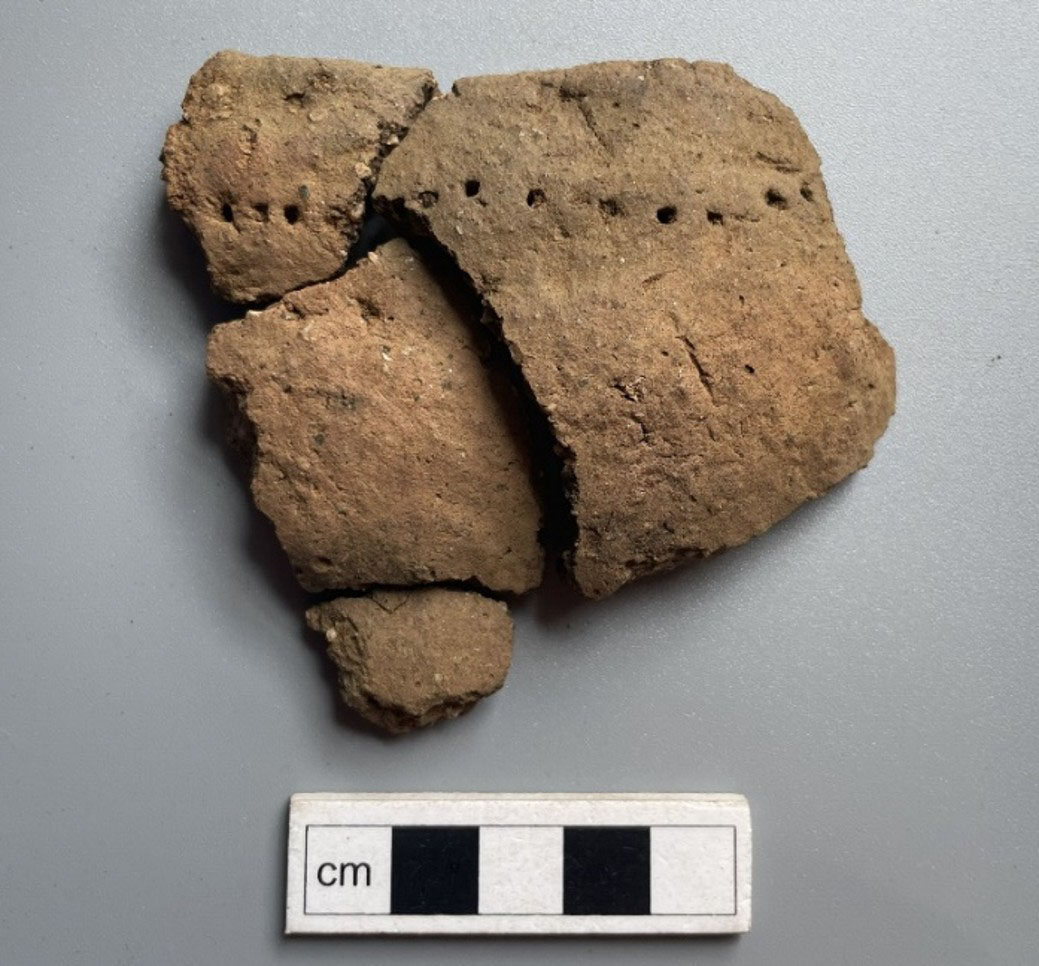
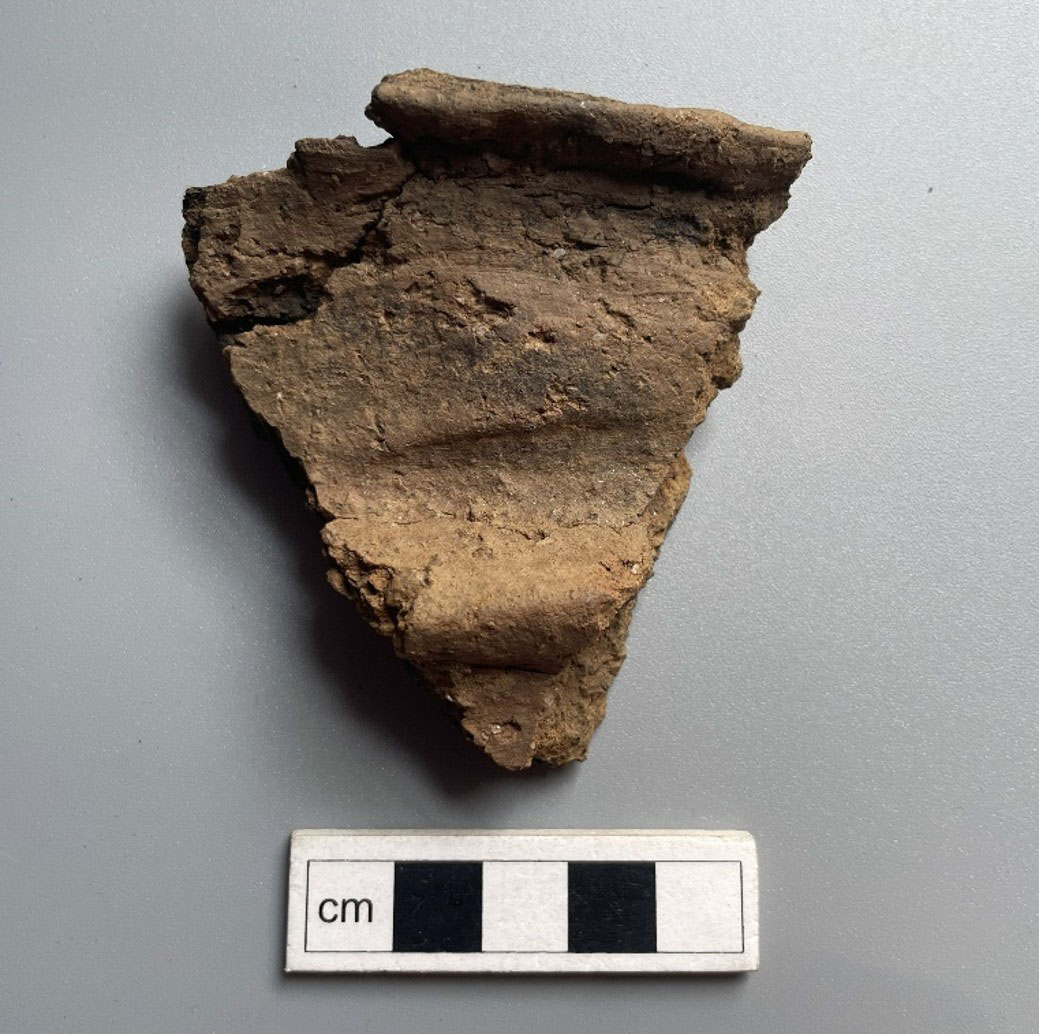
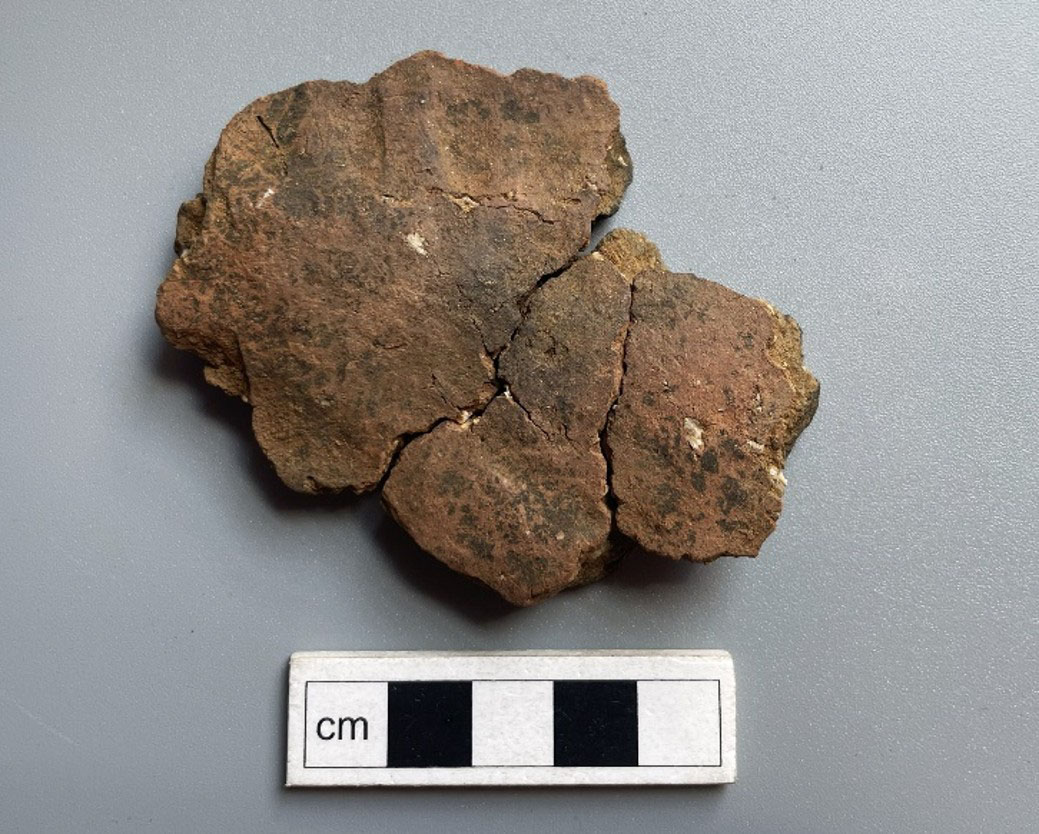
Fragments of Early Neolithic ceramic bowls, which fall within the Carinated Bowl Tradition, were recovered from the Neolithic pit groups on the site. These were generally characterised by their rounded, convex bases, with some fragments displaying features such as cordons, lugs and small decorative effects. The bowls were likely practical artefacts used in everyday life for activities such as cooking. Fragments of these vessels may have been deposited in the pits as part of routine waste disposal, though the possibility of symbolic meaning attached to such deposits cannot be discounted.
Carinated bowls are a common Early Neolithic style where there is a sharp angular ridge around the shoulder of the bowl creating an S-shaped profile rather than one continuous curve.
Click the icon to find out more about each pottery fragment.
Death in the Bronze Age
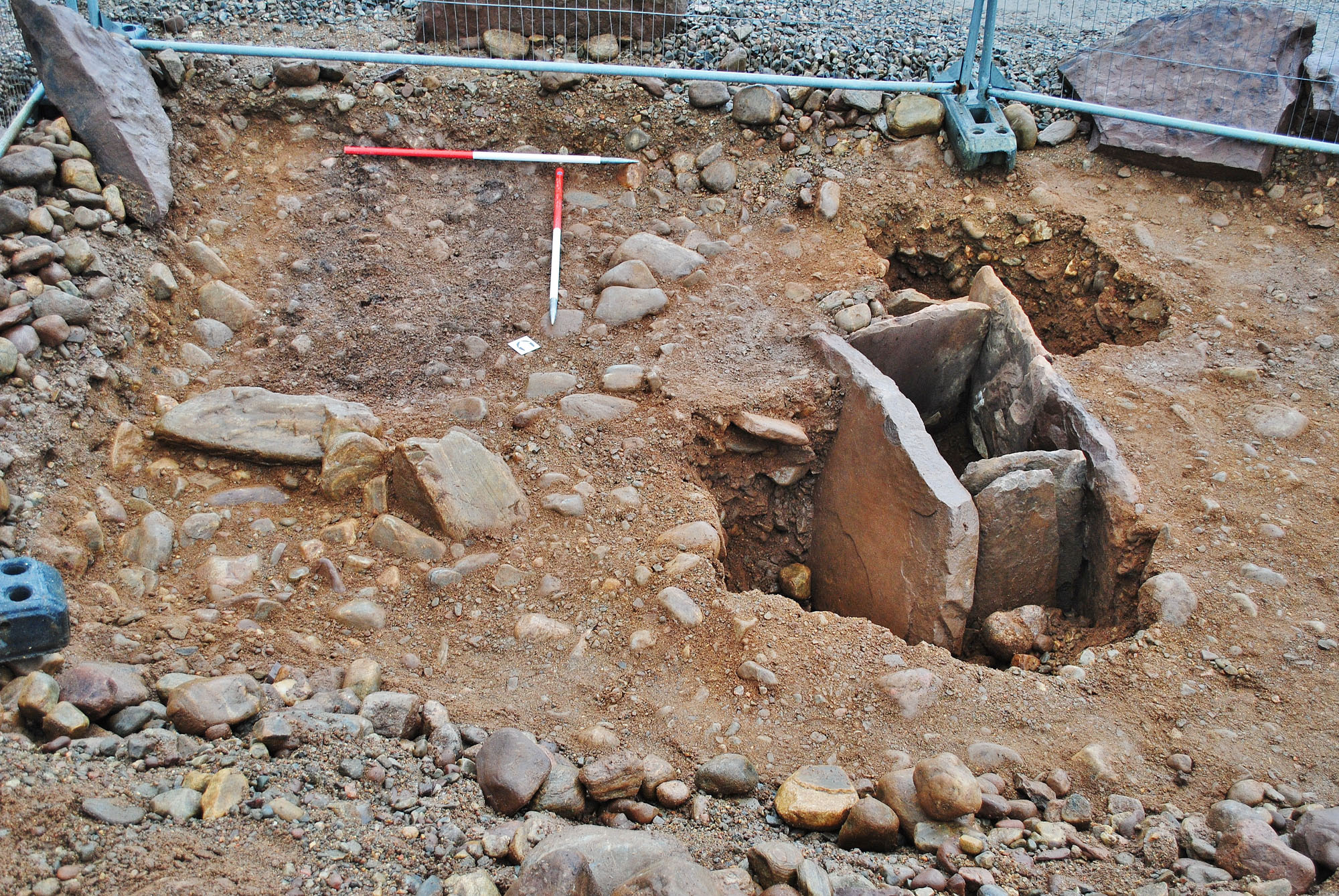
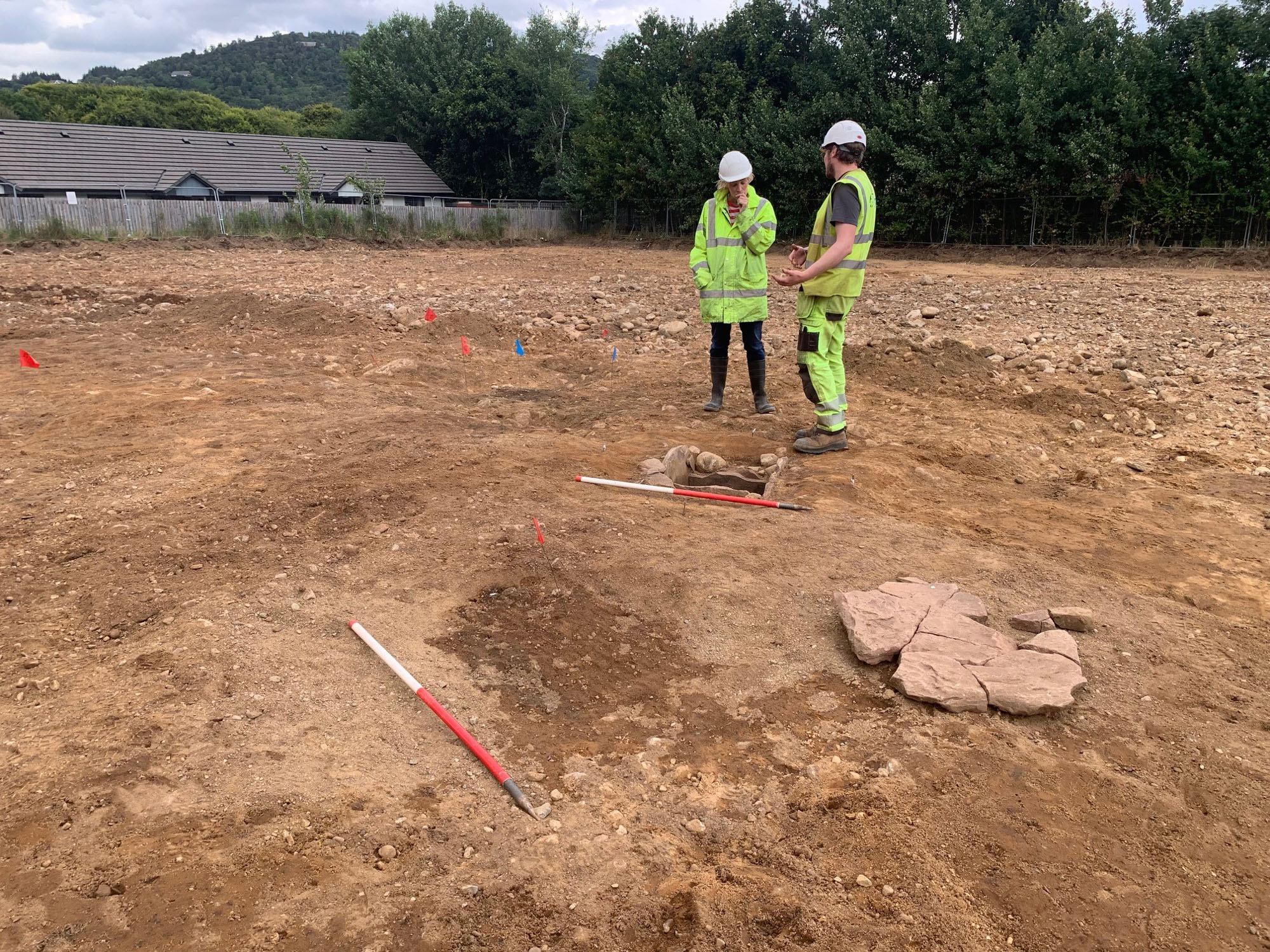
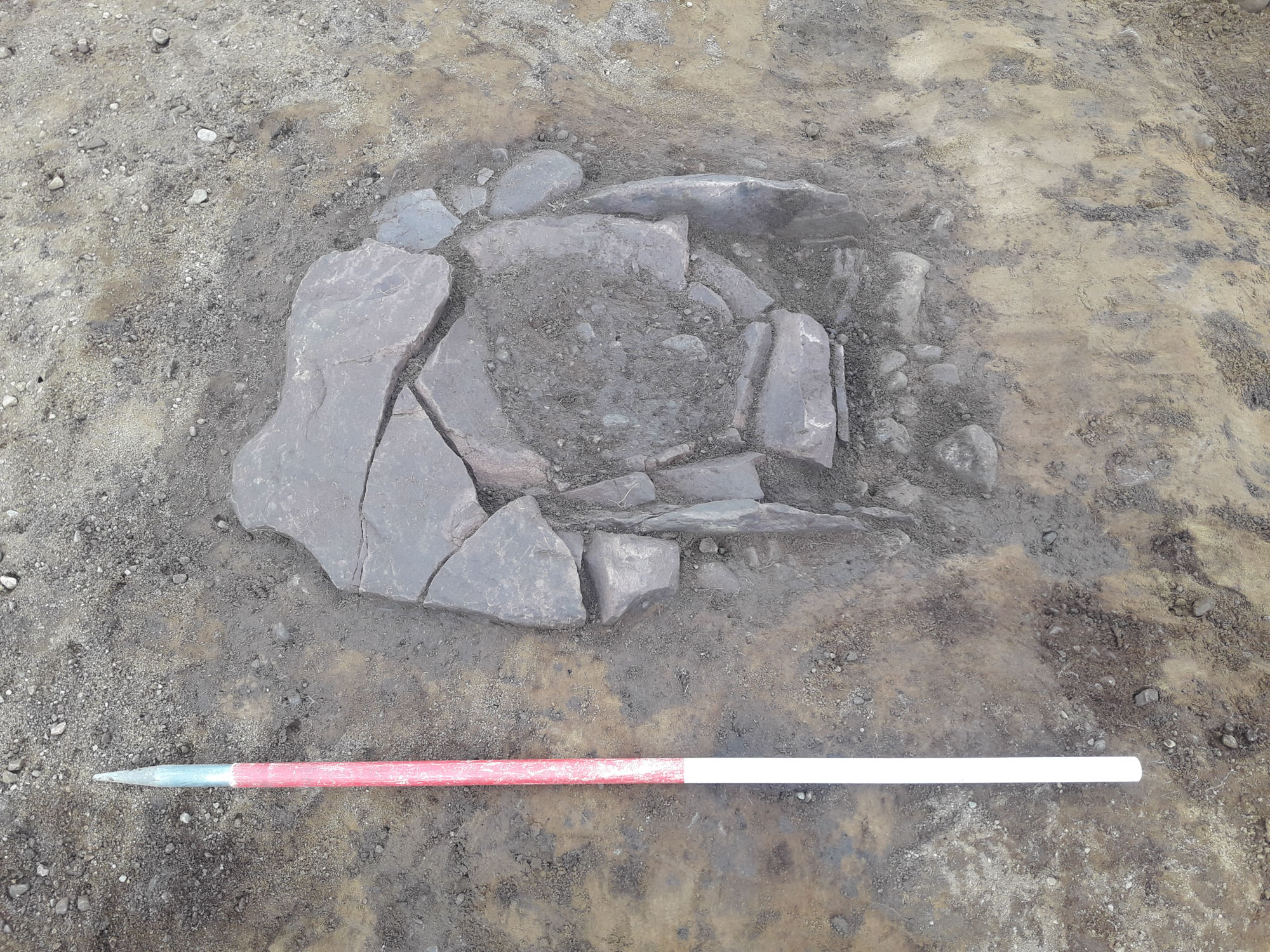
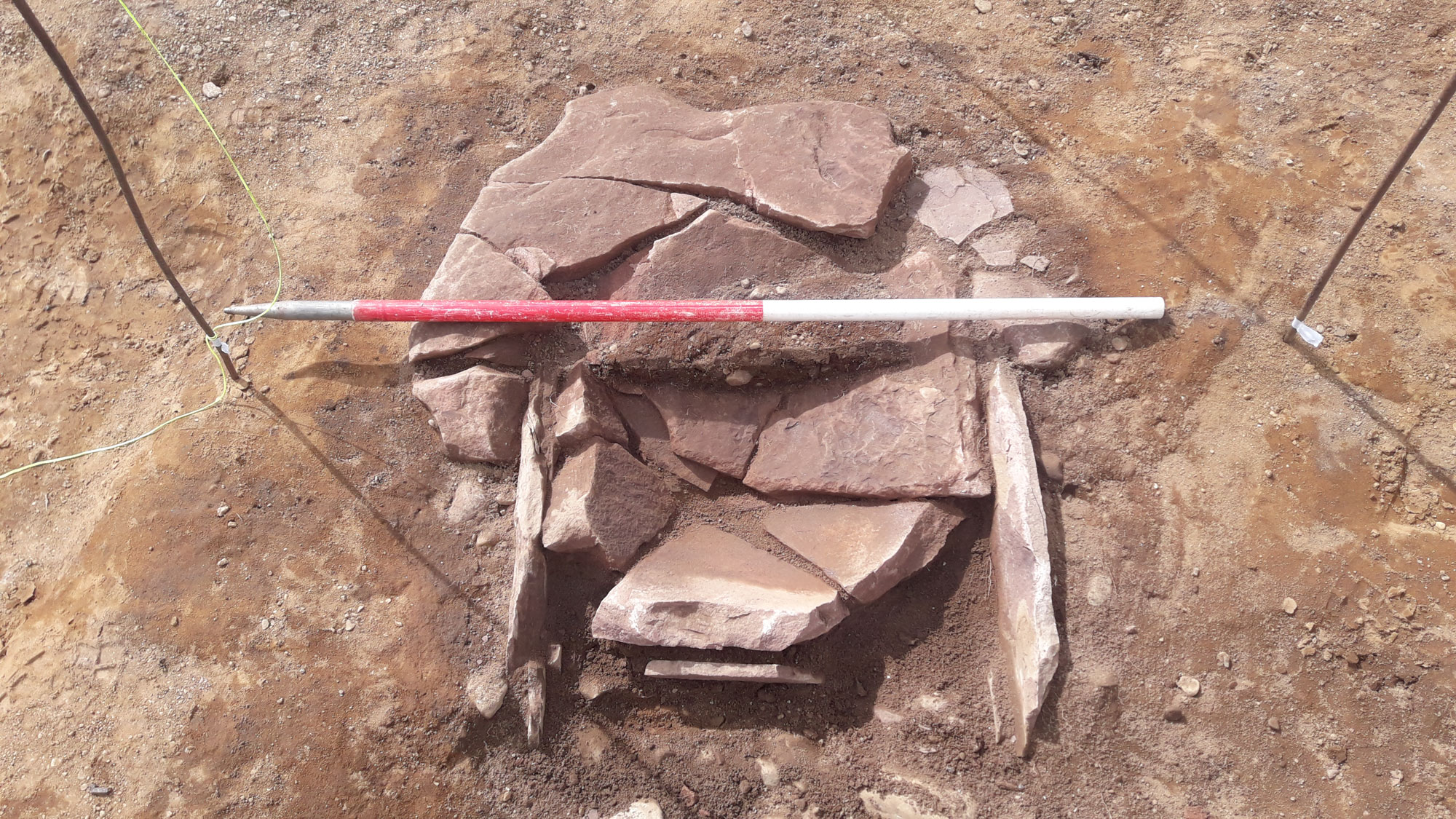
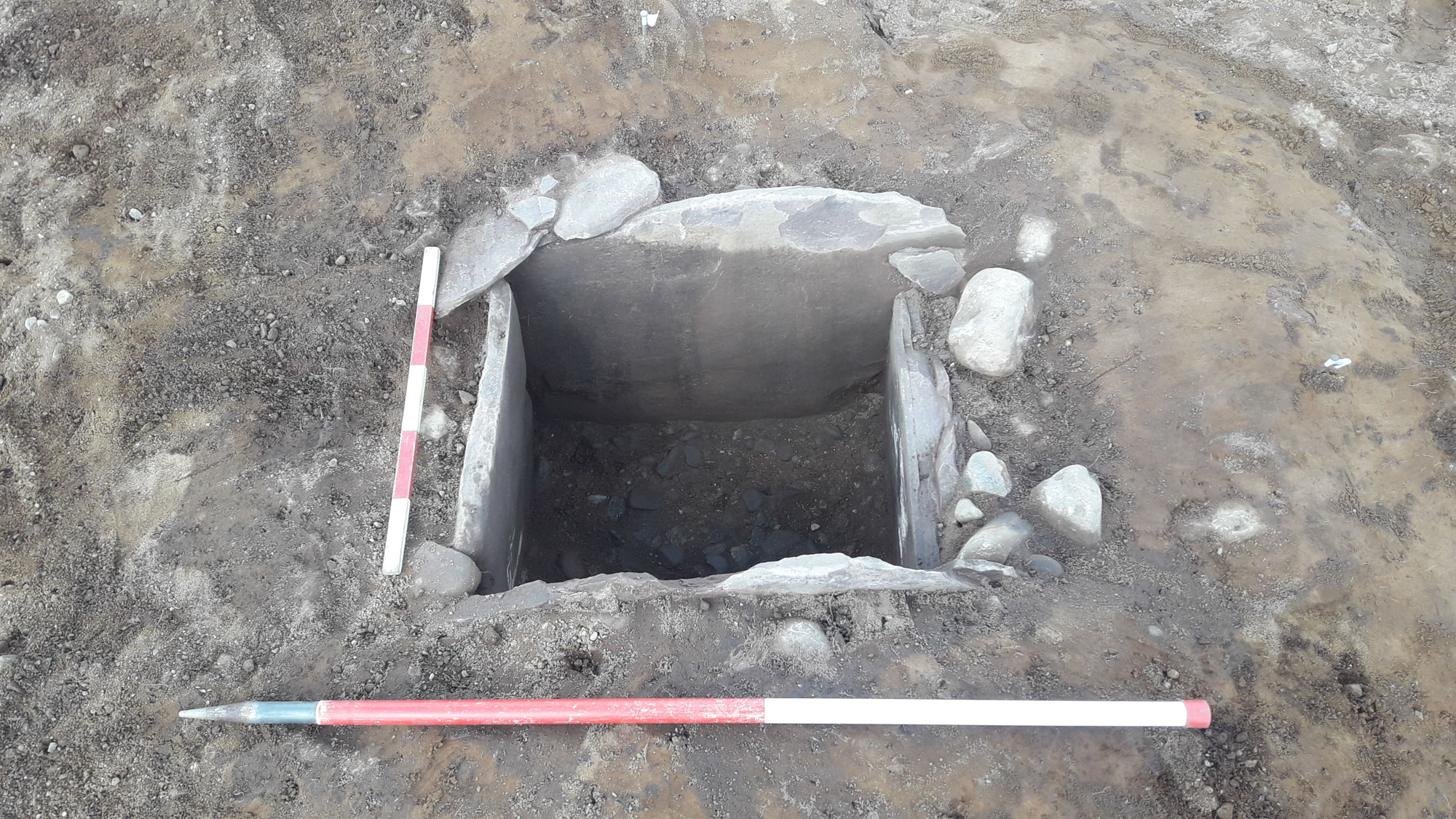
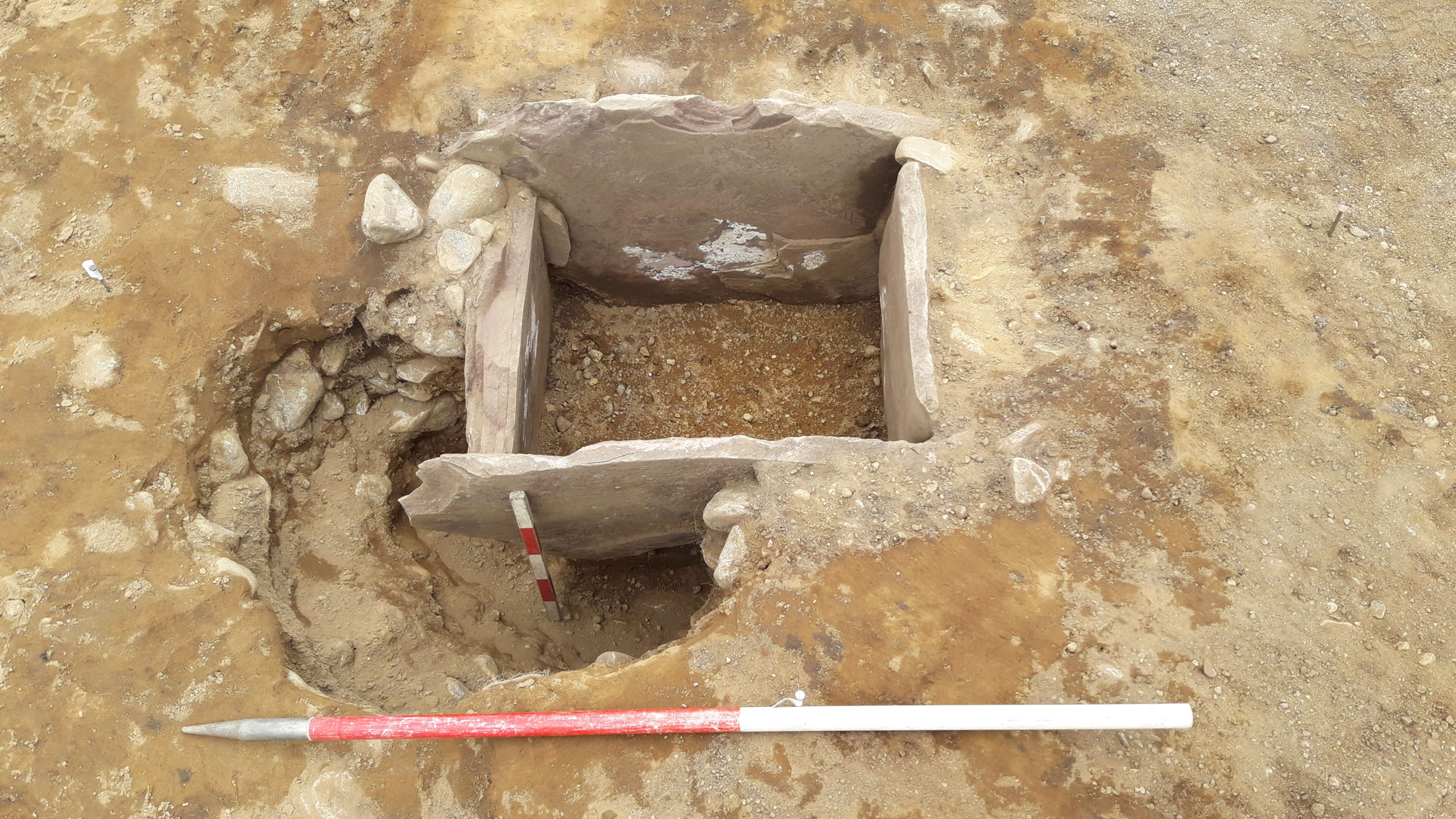
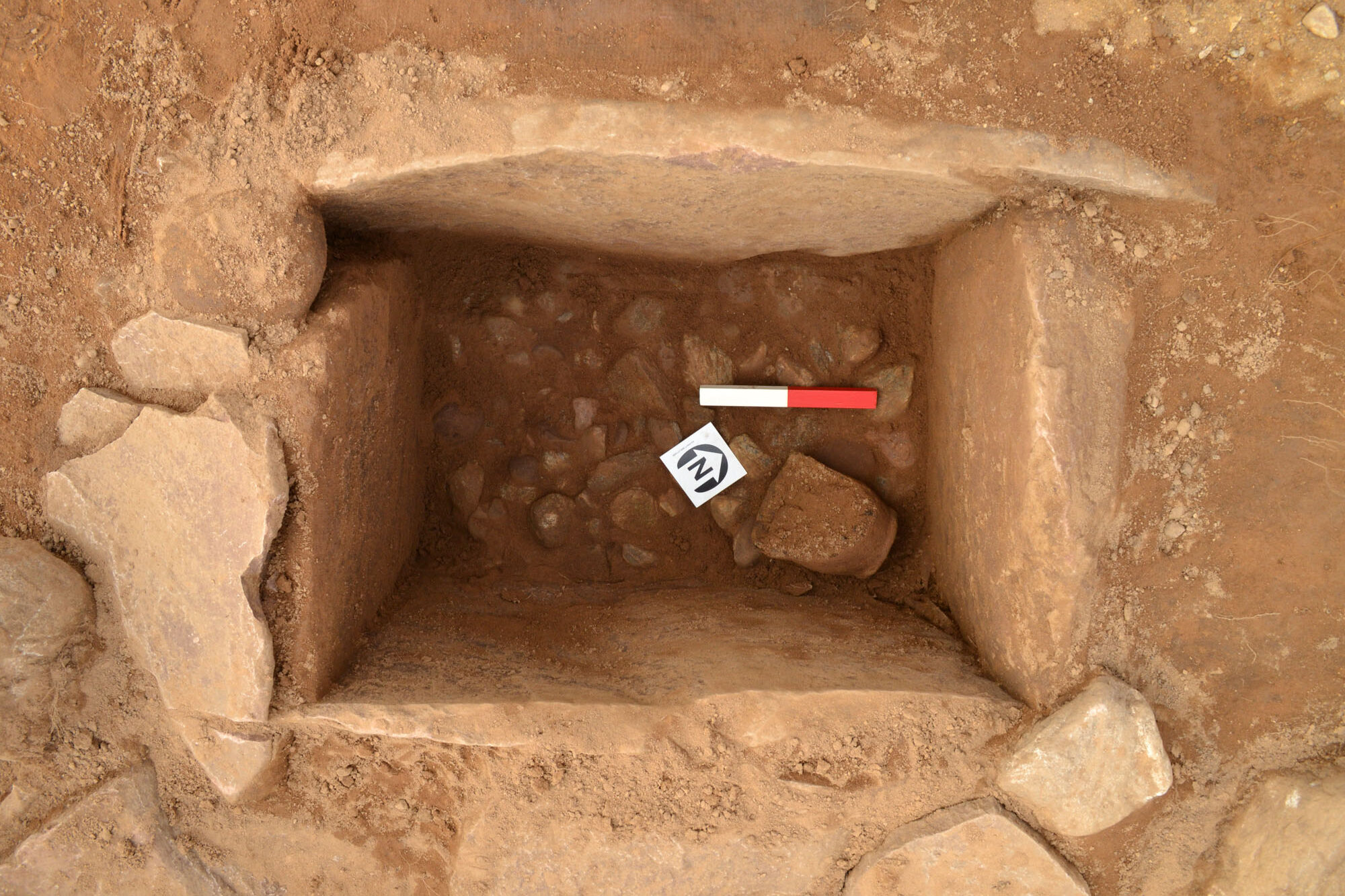
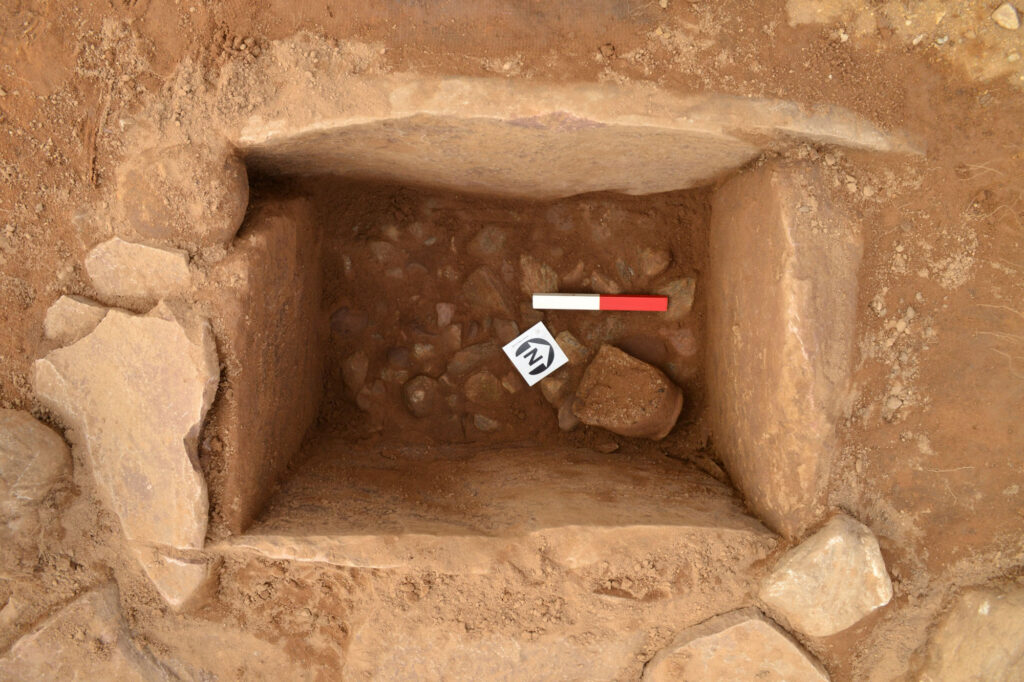
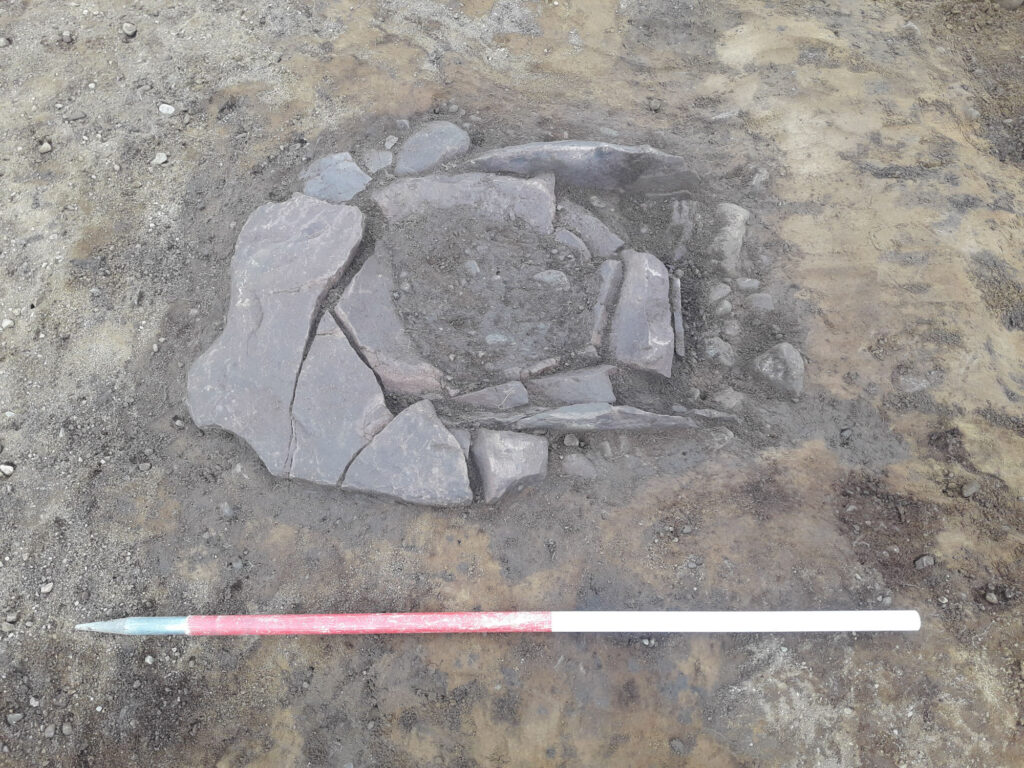
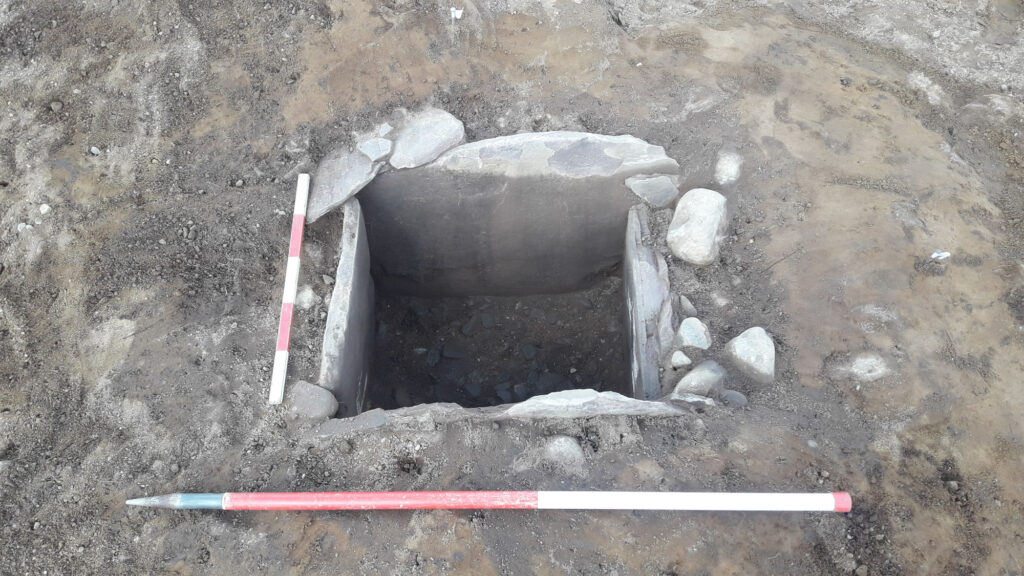
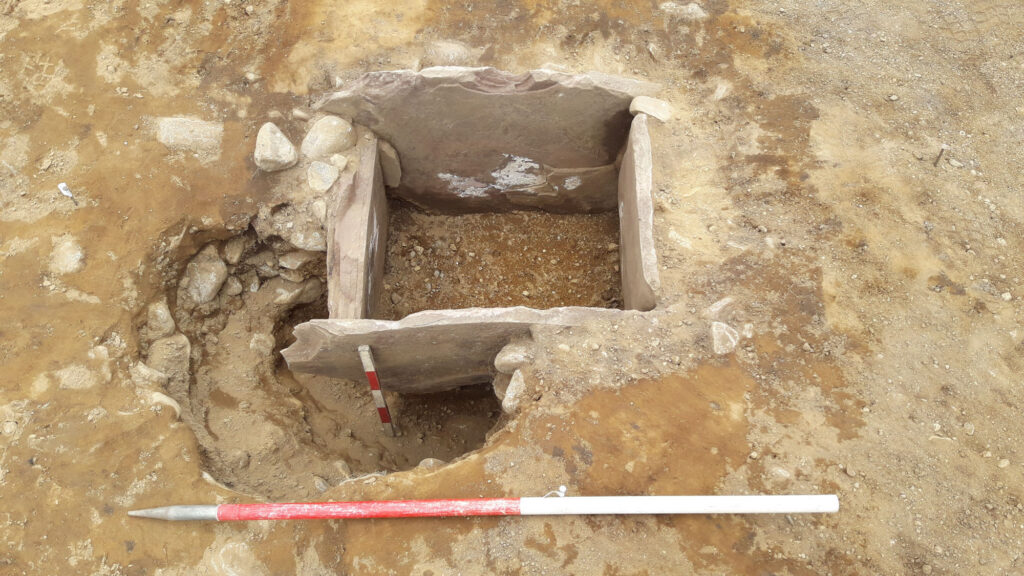
During the Bronze Age, the use of the landscape in this area changed from a place of the living to a place of the dead. Within the site, six cist burials and two pit graves were found, all radiocarbon dated to a period between 2,200-1,900 BC. The skeletal remains were very poorly preserved, but the surviving remains indicate that each burial contained a single individual, most of which were adults though at least one child was identified.
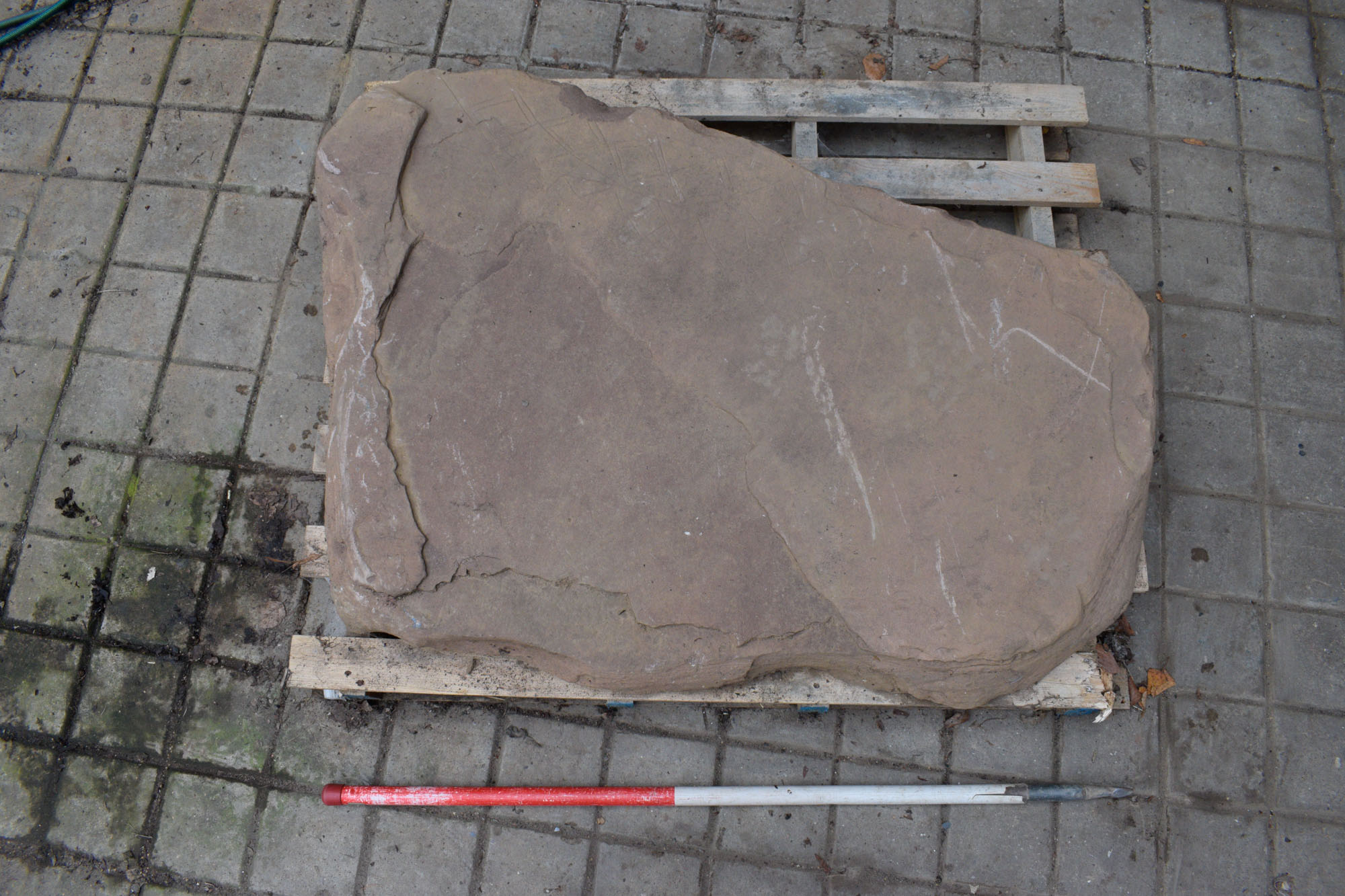
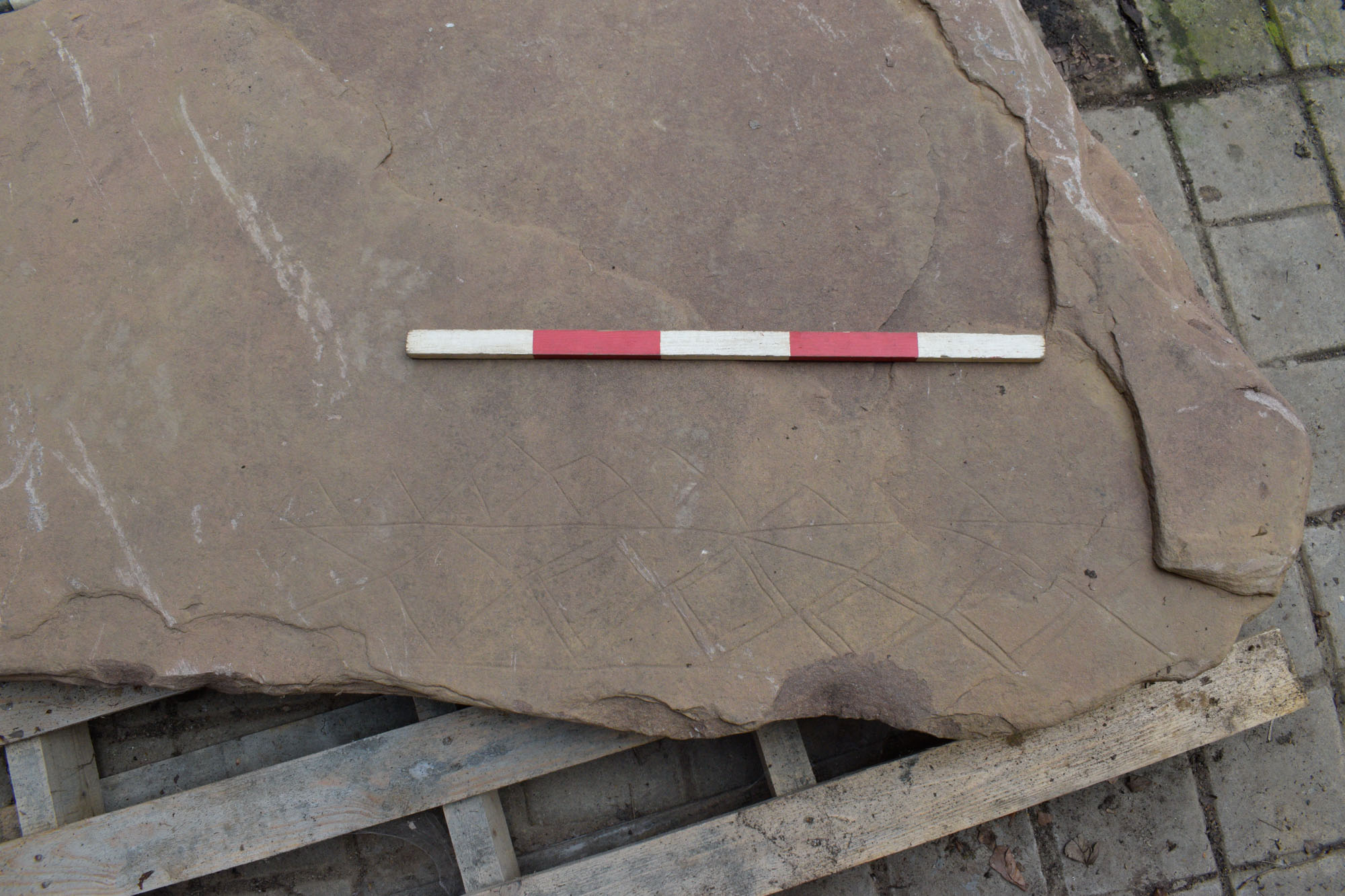
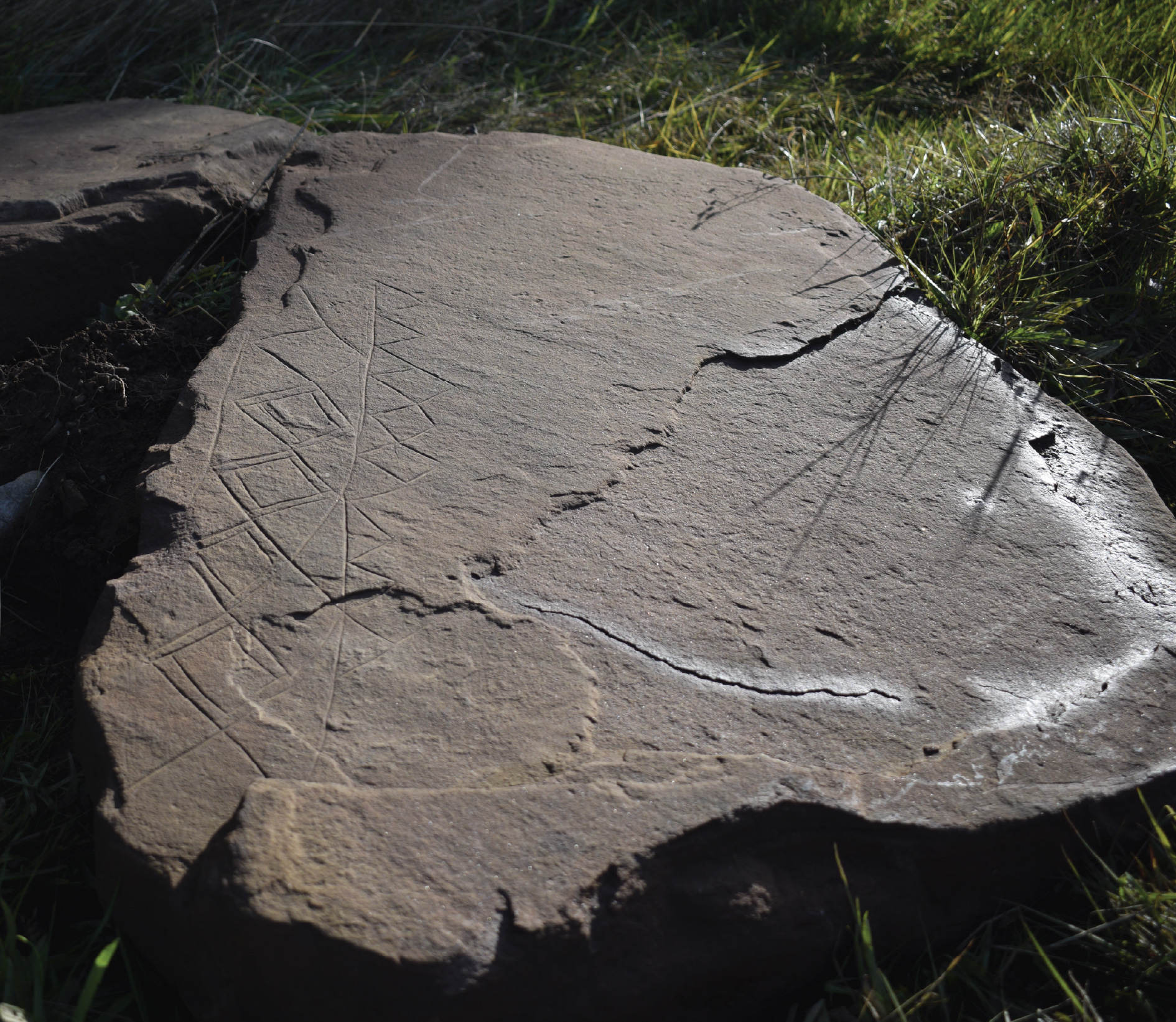
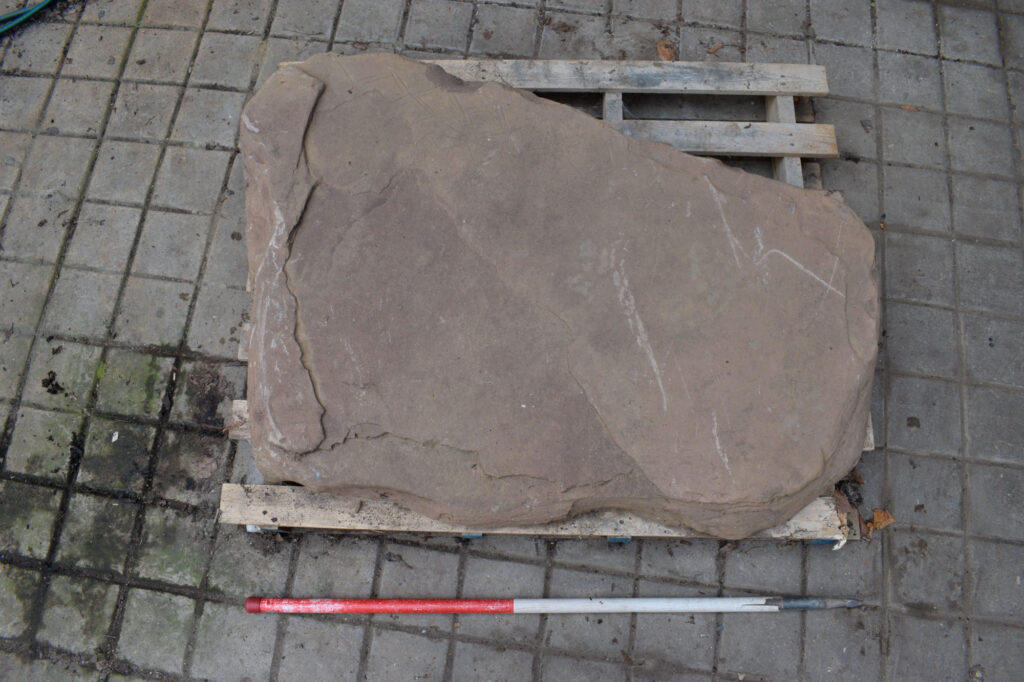
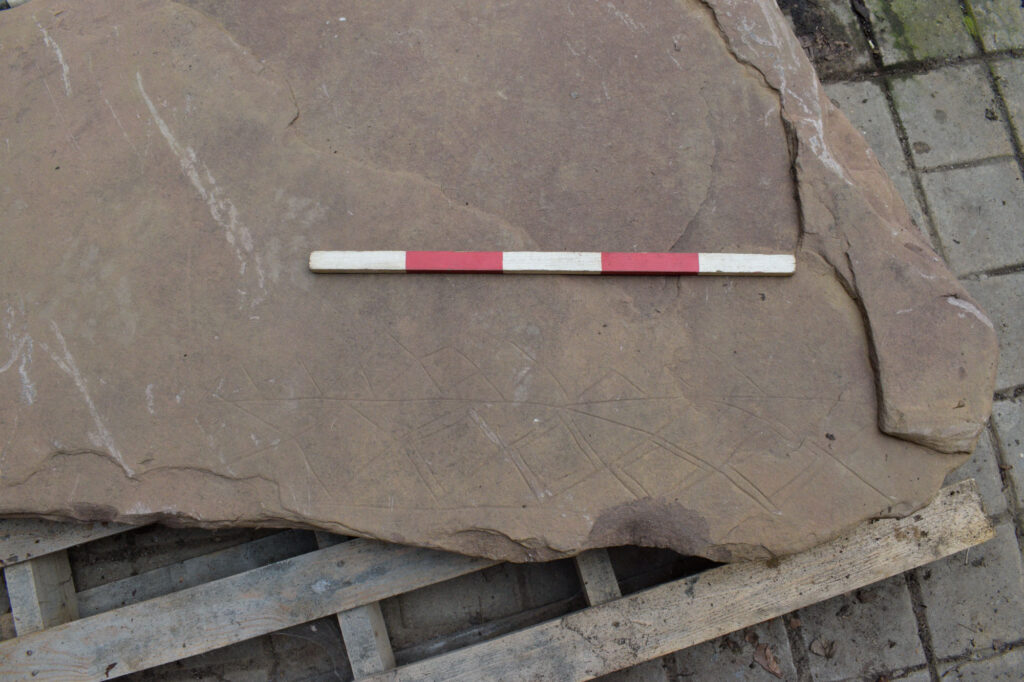
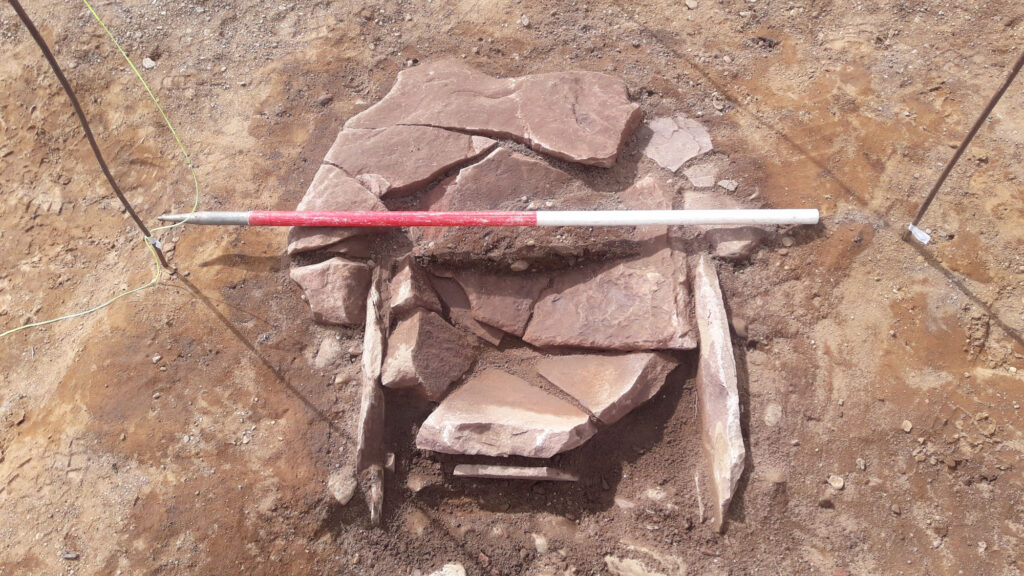
The stone cists were constructed with four large slabs set into the ground and were likely covered by a fifth capstone slab, though these did not survive in all cases. One of the surviving capstones revealed a geometric design of incised lines, lozenges and triangles similar to those normally found in Neolithic passage graves. This slab was likely much older than the Bronze Age cist and reused from an earlier, now lost, burial site.
Use the slider to view the capstone under natural light or with the geometric design highlighted.


Grave Goods
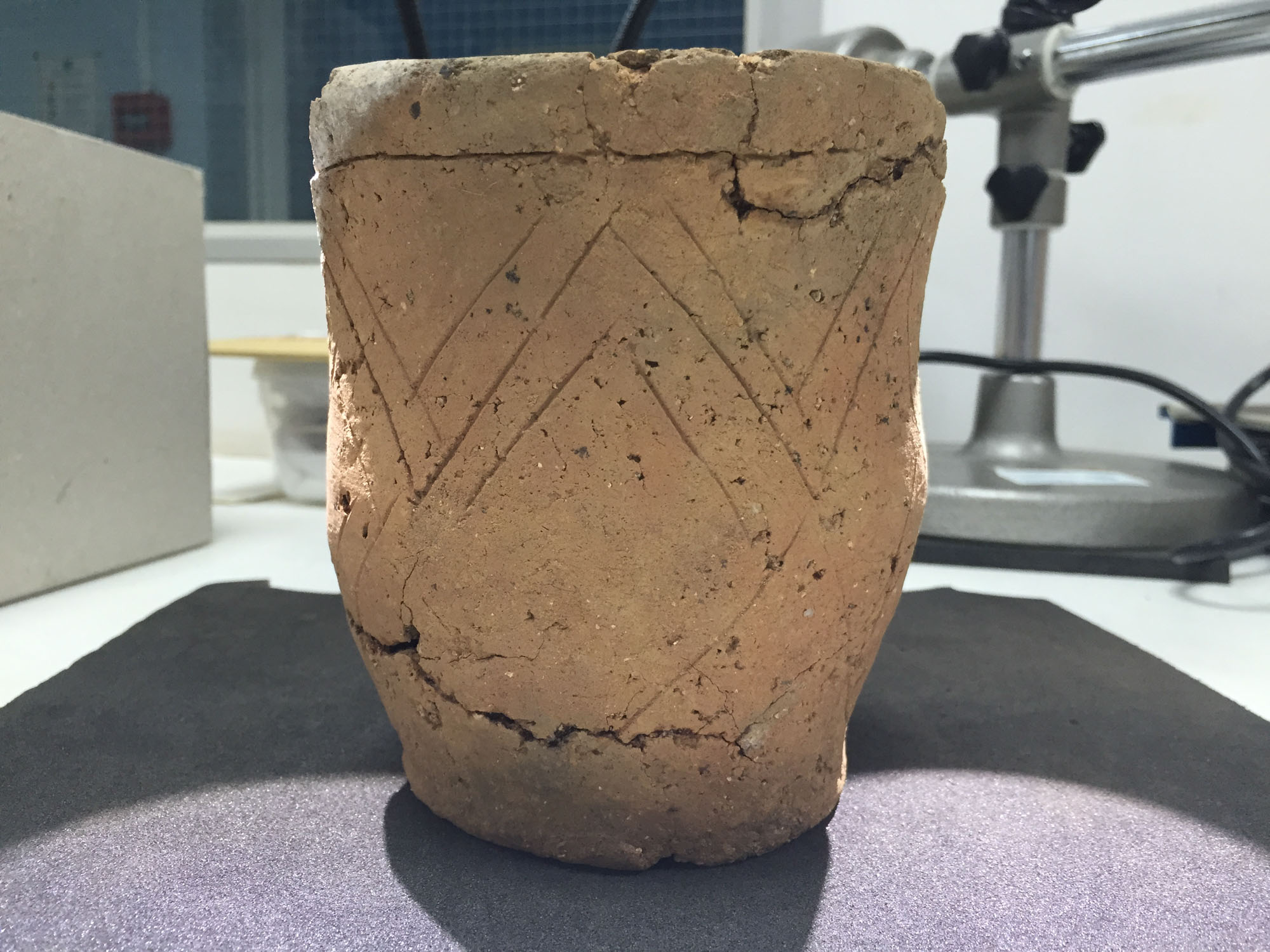
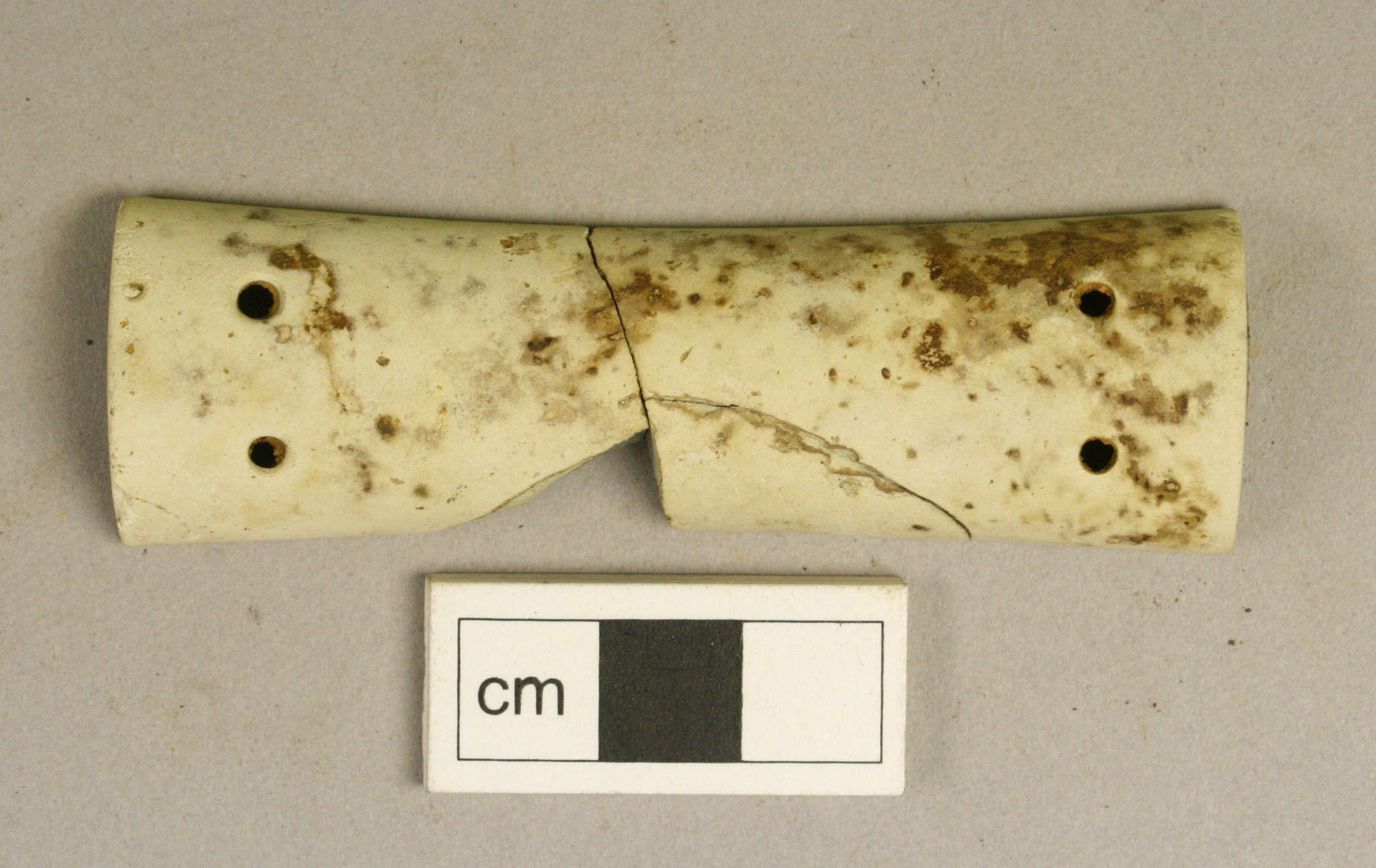
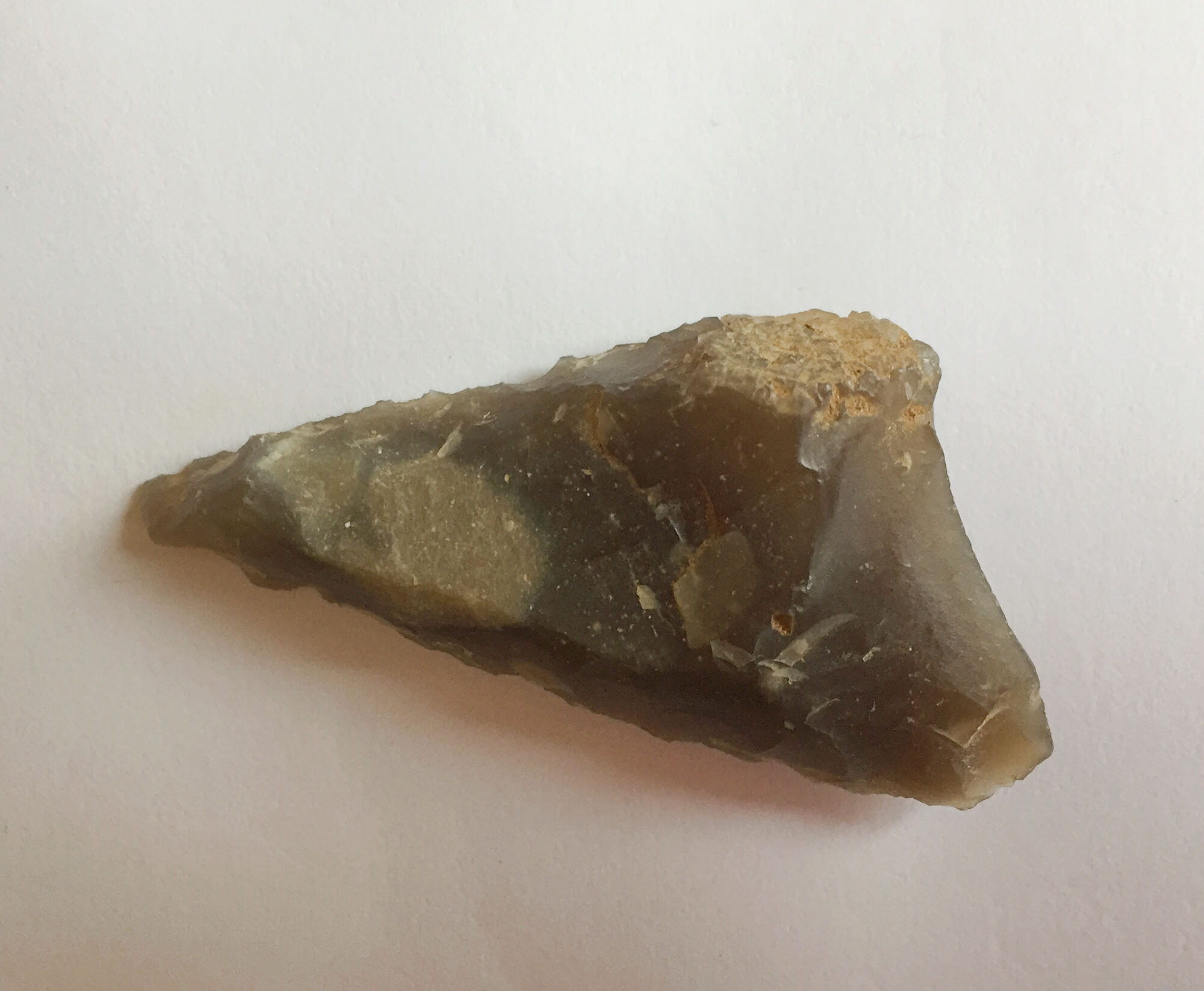
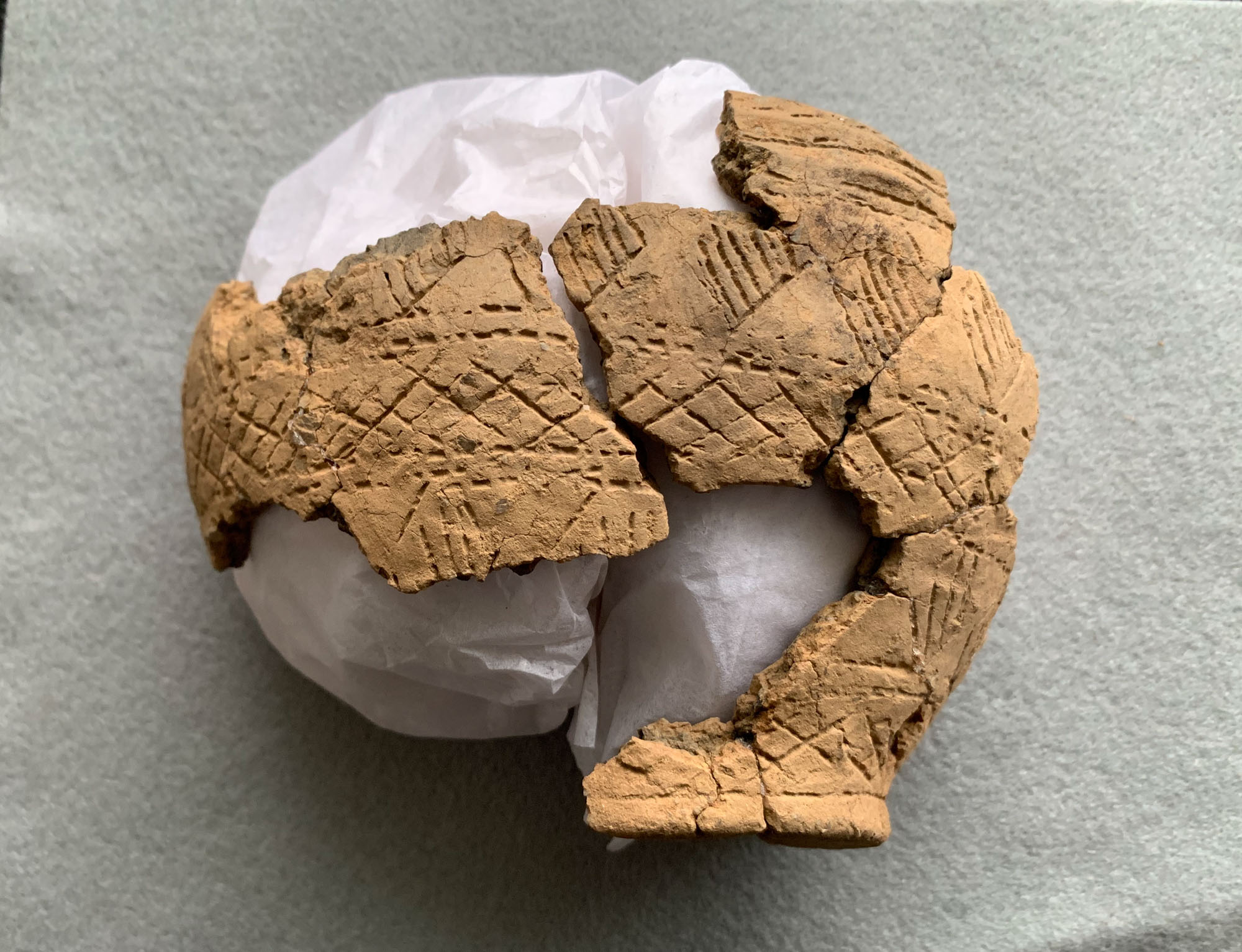
Though the graves have been disturbed by erosion and historic ploughing, decorated ceramic vessels were found in three of them, including an intact Beaker and joining fragments from a decorated, hybrid Beaker or Food Vessel. Other objects placed with the burials included a stone wrist guard and a flint knife. The stone wrist guard was a common archery artefact found in Bronze Age male burials. Organic material and hair were found on the underside of the artefact, suggesting it may have been attached to a piece of animal skin.
Click the icon to find out more about each artefact.
Iron Age Lifeways
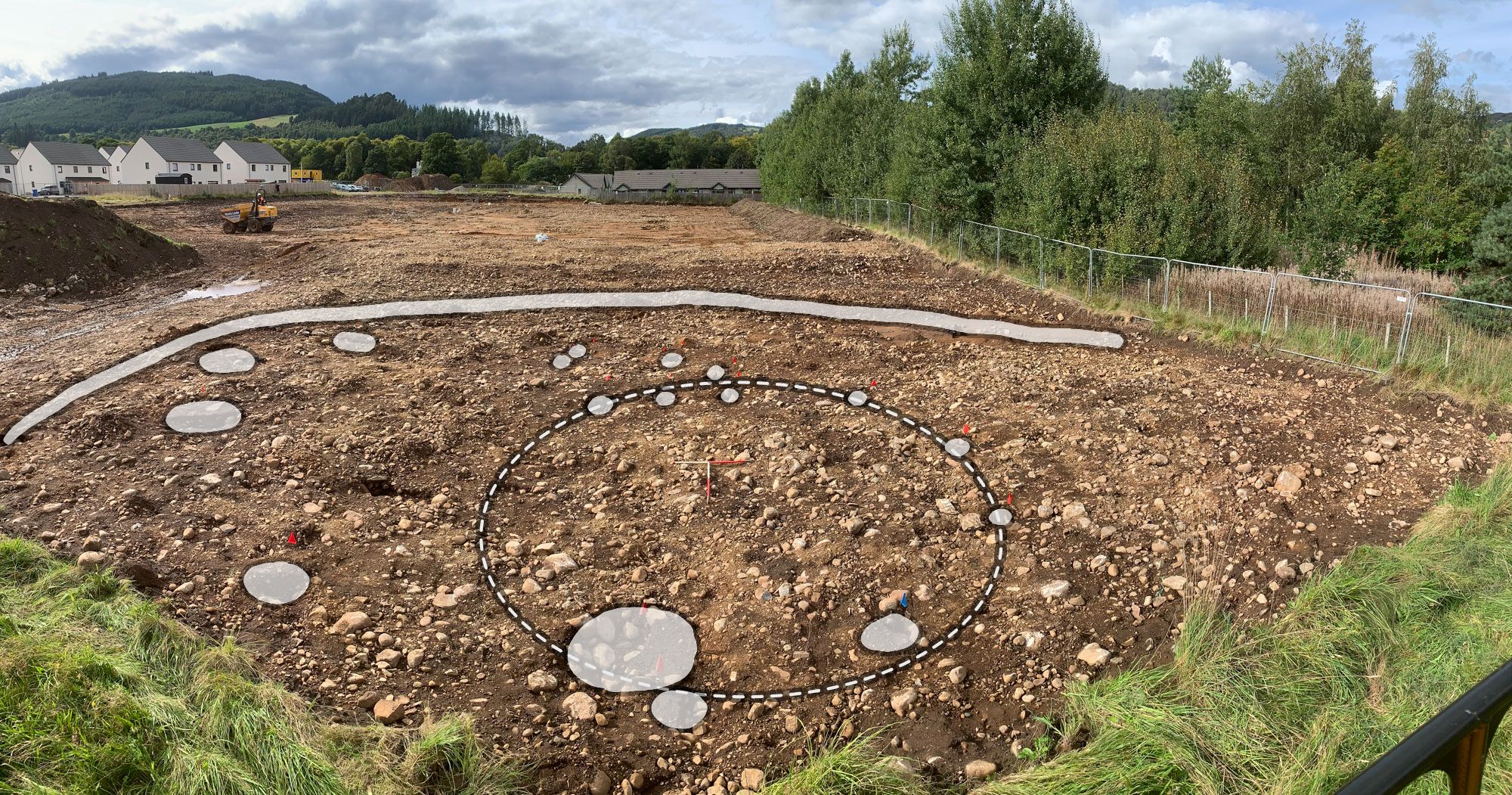
By the Iron Age, the site at Lewiston once again became a place of human settlement. A roundhouse represented by a ring of postholes was found on the eastern edge of the site within an area enclosed by a palisade ditch, which may have held a defensive perimeter fence for the settlement. Radiocarbon dating suggests the settlement was occupied sometime between 700-400 BC. The roundhouse was likely a domestic dwelling house, with various pits located outside the house related to everyday activities.
Environmental remains recovered from the pits provide insight into the Iron Age diet, indicating that hulled barley was the primary cultivated crop alongside a range of wild fruits, nuts and weeds. A possible barley processing area was identified outside the roundhouse, formed by two pits containing large quantities of burnt barley grains, one of which had been processed to remove all other plant species.
The Iron Age settlement area
An Iron Age Cremation
An intriguing feature found outside the palisade-enclosed settlement proved to be a cremation burial pit containing the remains of a child dated through radiocarbon to between 167 BC and 67 AD. Burial remains from Iron Age contexts are rare in Scotland, making this example an important find. Only a small amount of bone was found in this instance, suggesting it may have been a token deposit rather than a full burial. How this burial relates to the nearby settlement is unclear.