



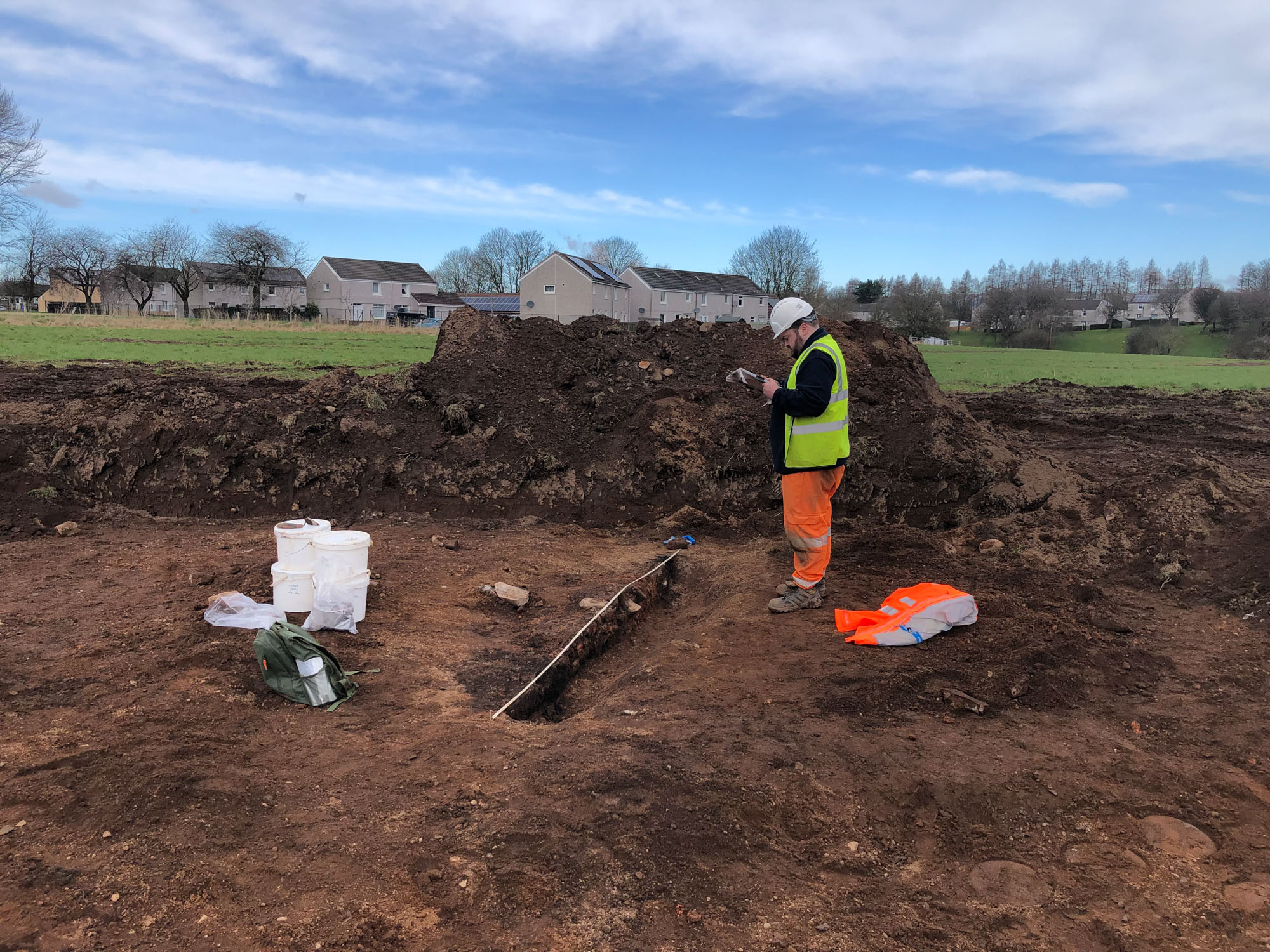
At Cushenquarter Farm in Stirlingshire, recent archaeological works have uncovered the remains of pits, pots and postholes spanning the Mesolithic to Medieval periods. As well as Mesolithic and Early Neolithic activity, the site was home to a Bronze Age roundhouse and a possible 14th-15th century ceramic production site. While unassuming at first glance, these pits and postholes tell the story of human settlement in the area over thousands of years.
The archaeological works were carried out in 2023 ahead of a new residential development funded by Persimmon Homes.
Pits and Pots through Time
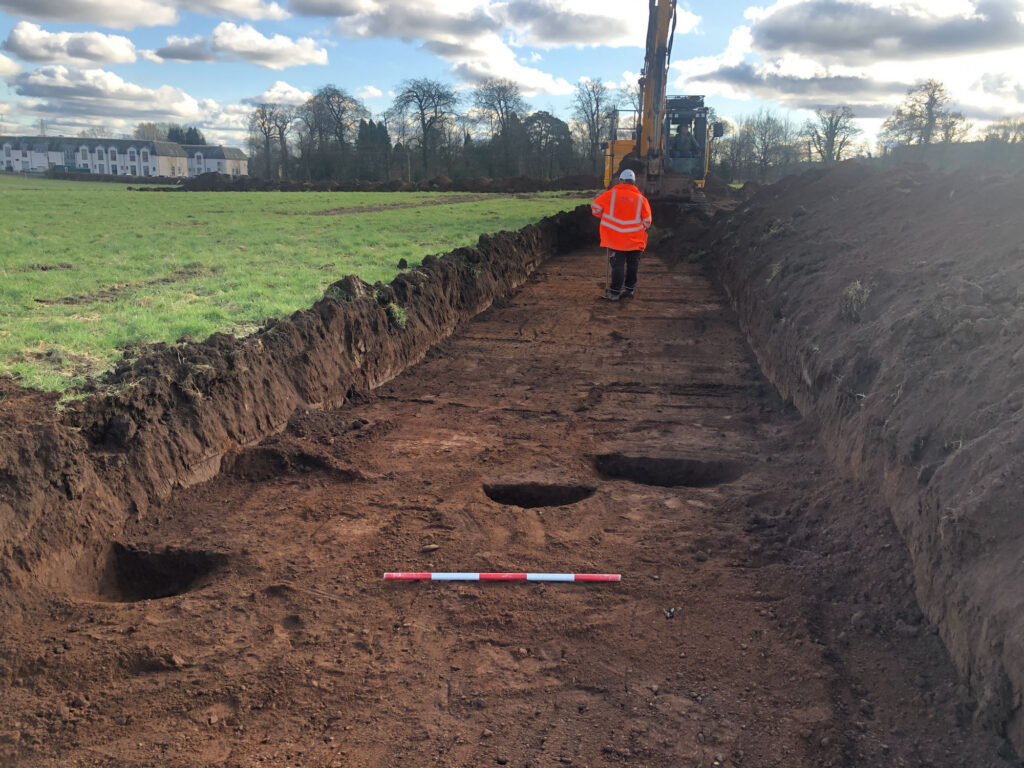
The earliest archaeological evidence from the site came in the form of several small pits containing flecks of charcoal. This burnt material, which likely represents fuel waste, was radiocarbon dated to approximately 6,600 BC. During the Mesolithic period, settlement was largely nomadic with groups of hunter-gatherers moving across the land and making only temporary campsites, which leave little evidence behind.
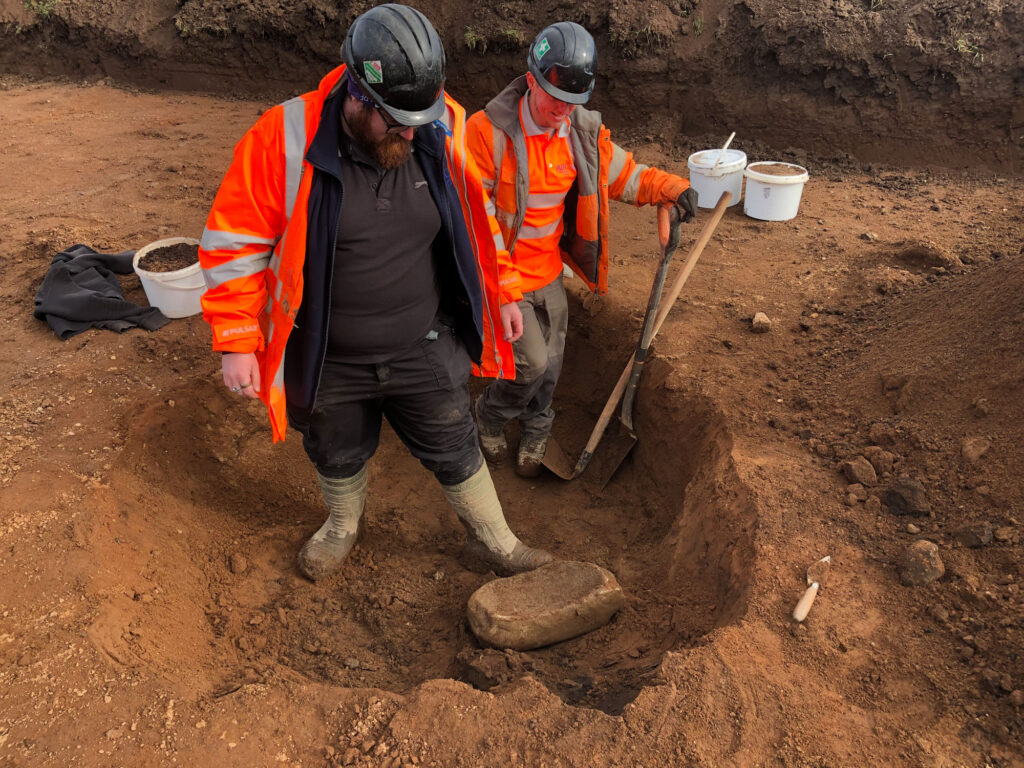
Around 3,000 years later, human activity in the area was still represented by small groups of pits, though these were associated with the Early Neolithic farming communities. Fragments of both ceramic Carinated Bowls and Impressed Wares were found in these pits as well as a stone saddle quern. The practice of depositing domestic objects in pits alongside food and fuel waste is common across Neolithic sites. At Cushenquarter, it is possible that the pottery sherds and other artefacts were deliberately placed in certain pits, suggesting that the practice held specific meaning to the local people.
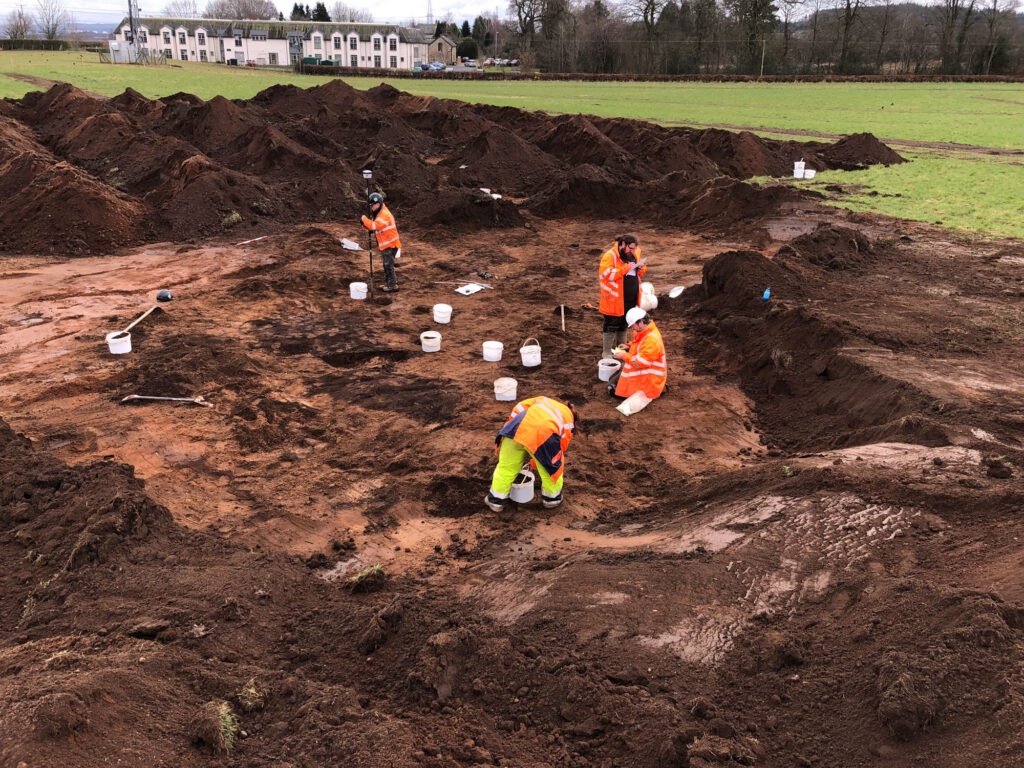
The first identifiable structure on the site was a middle Bronze Age roundhouse. This building, which was likely a domestic dwelling house, survived as a ring of postholes inside a semi-circular ring ditch. The postholes would have held timber posts to support the roof, while the ring ditch may have been created by erosion from activity areas around the edge of the house. The large number of postholes found suggests that this structure was maintained and repaired over a long period of time, possibly up to 90 years, with food and fuel debris becoming mixed into the postholes during repairs.
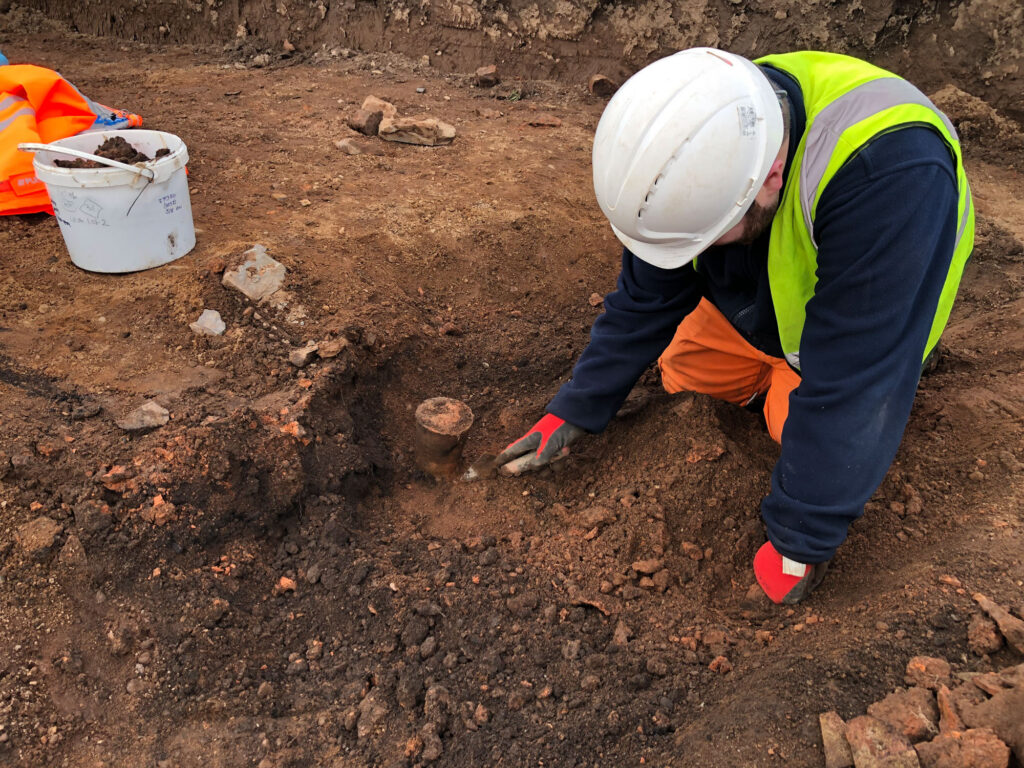
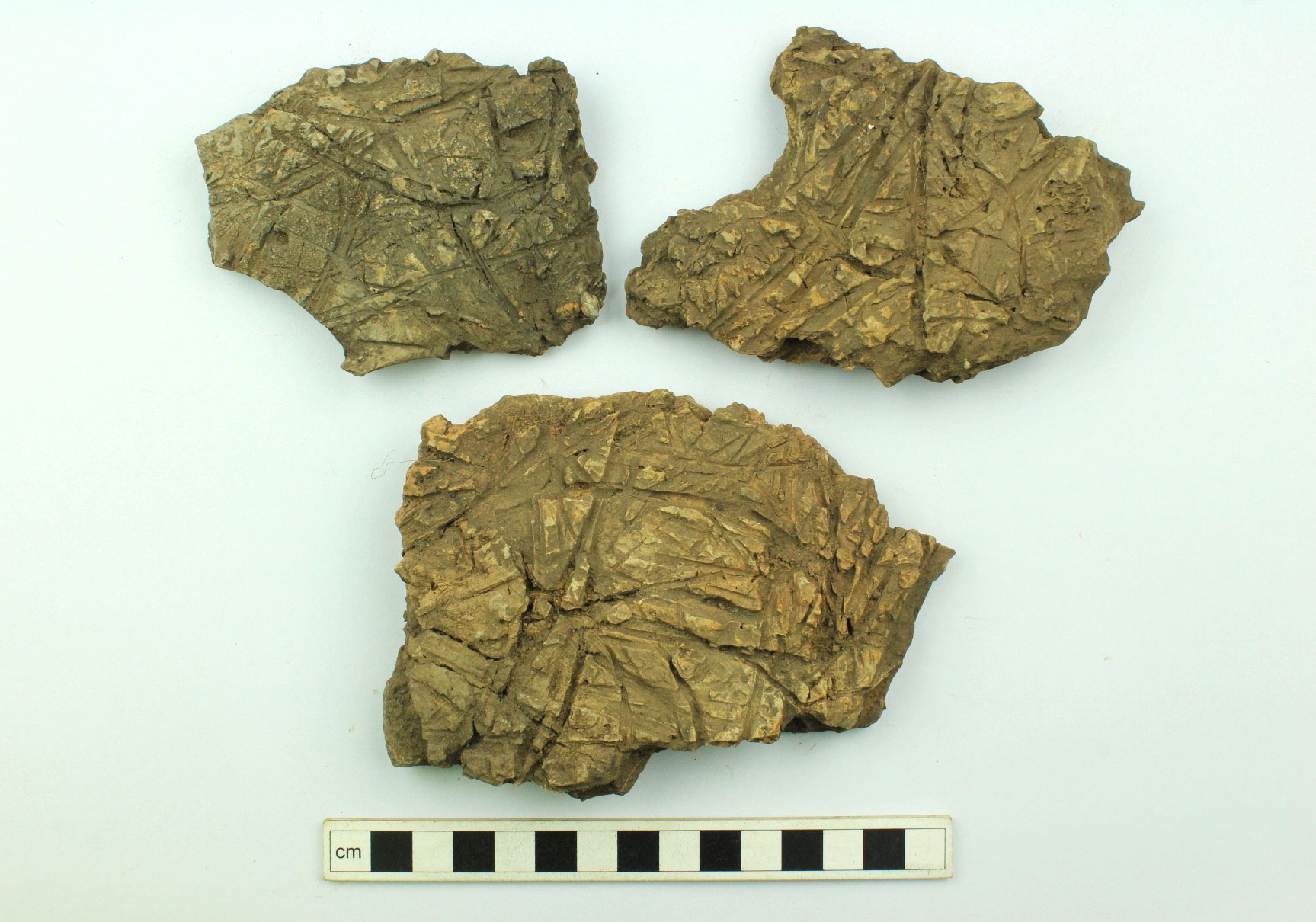
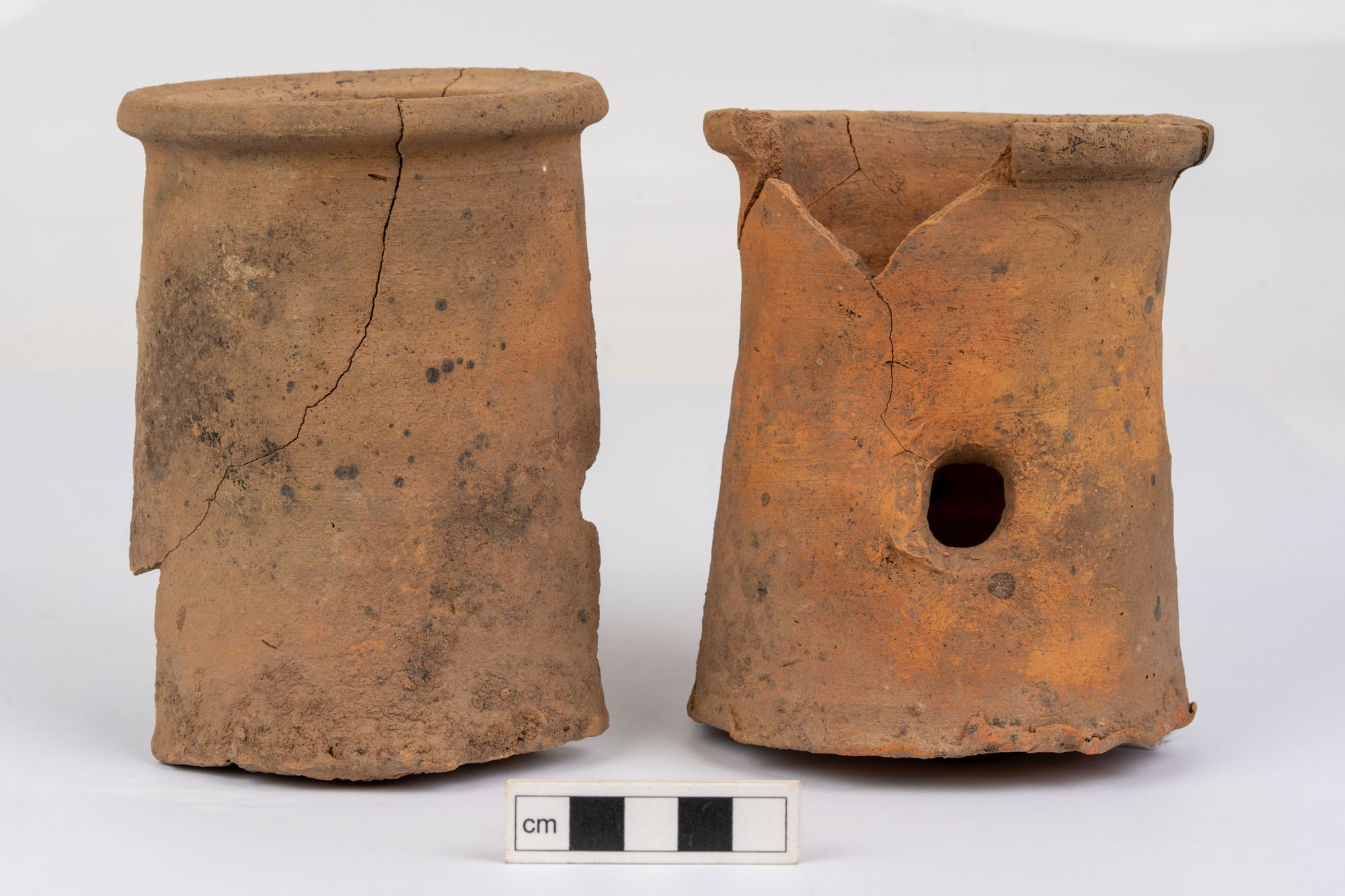
Jumping ahead to the Medieval period, Cushenquarter became an area used for the production of ceramics, mainly Scottish Redware jugs and jars. Two Medieval structures were found on the site, a four-post structure that may have been a small workspace and a possible dismantled pottery kiln. Though lacking in diagnostic structural features such as thick walls and flues (either through truncation or robbing of the structure), the possible kiln contained ceramic kiln props and significant fired clay deposits associated with a ceramic dome superstructure.
The Mystery of the Kiln
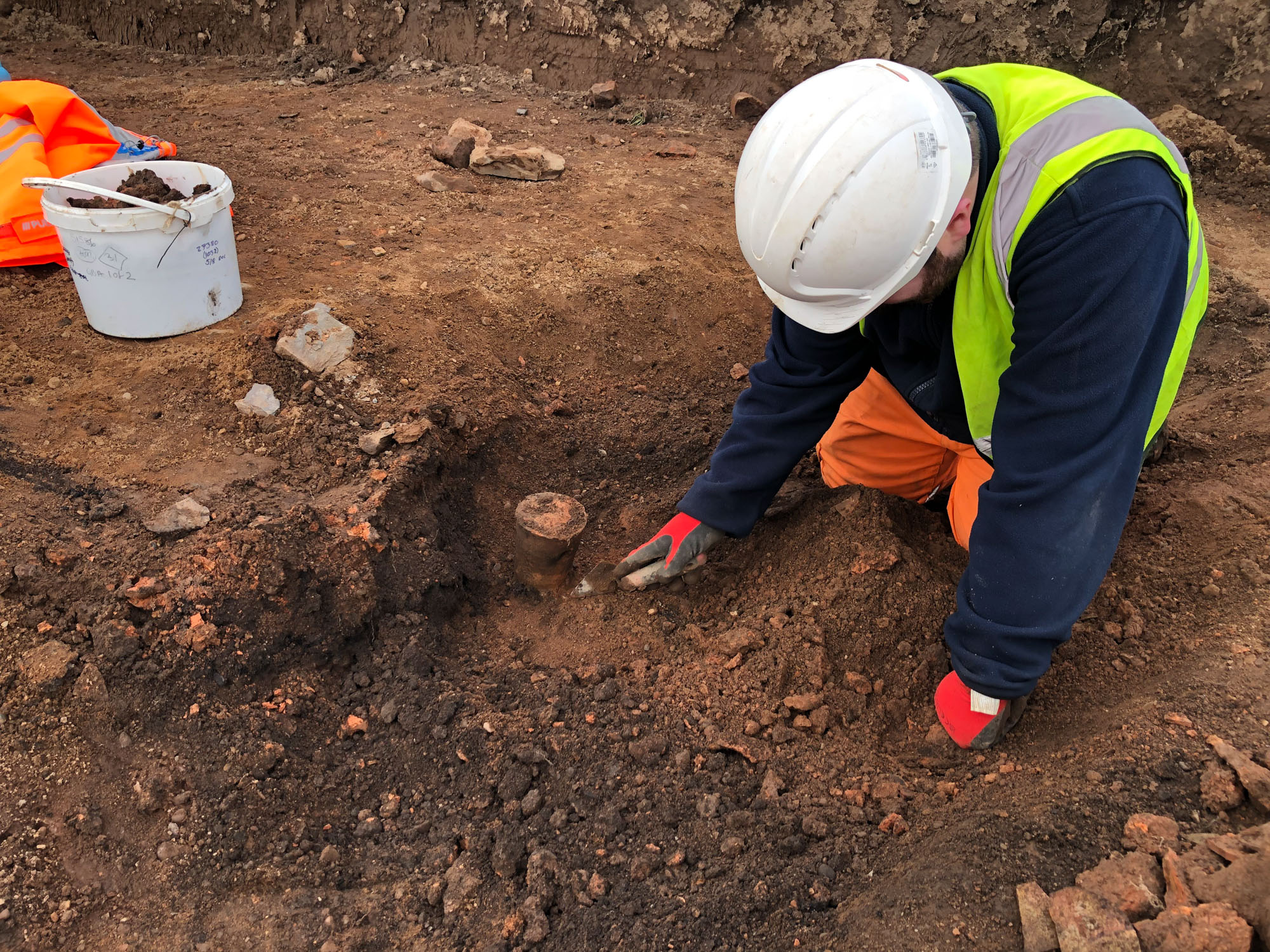
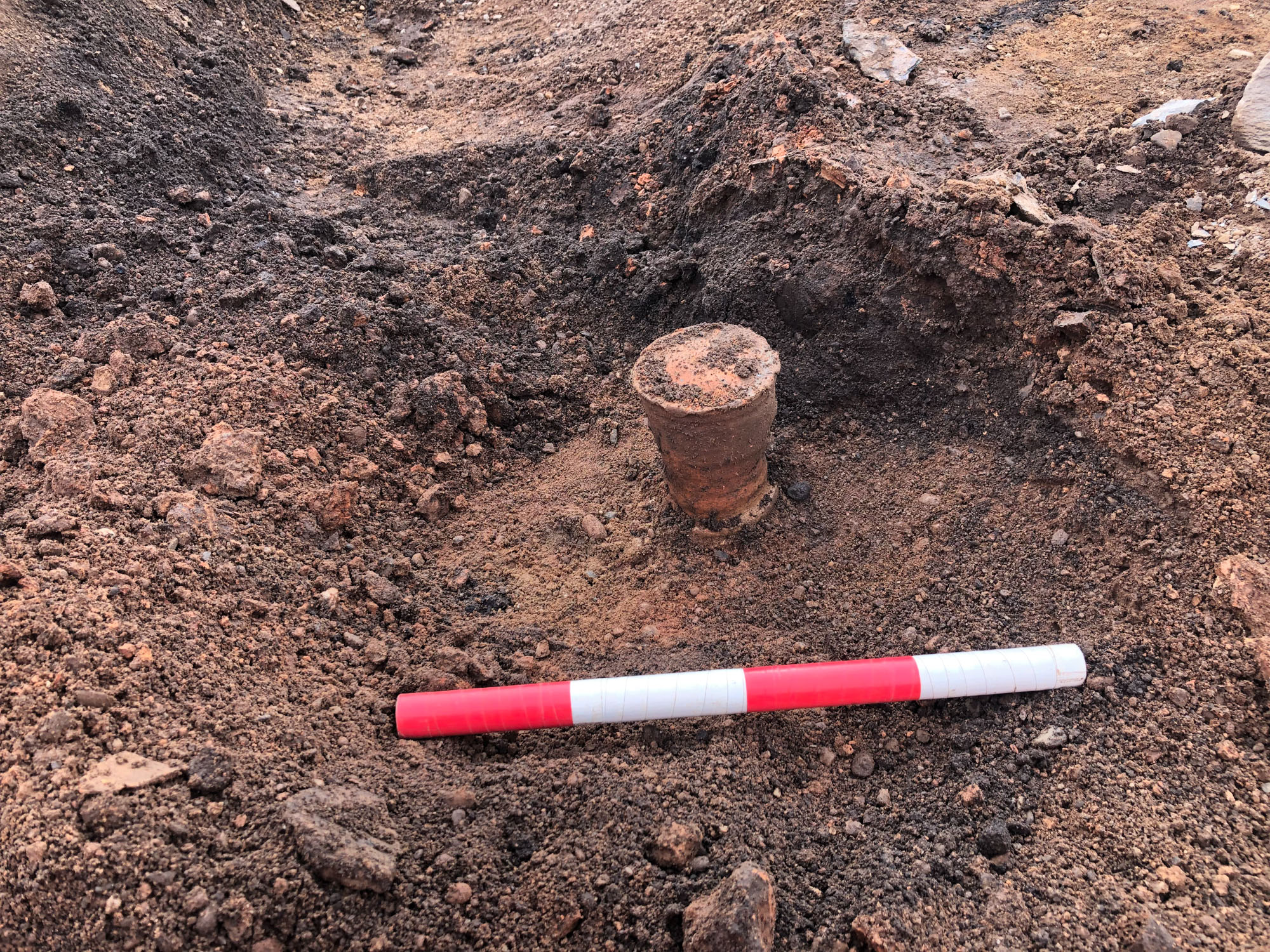
During the excavations, an intriguing feature was found that was identified as a possible pottery kiln. This oval pit contained a central bowl with two elongated ends and deposits of charcoal, ash and fired clay fragments from a wattle and daub structure. There were also two intact and upright ceramic kiln props at the base. While this feature lacks the diagnostic structural elements of a kiln, the presence of the fired clay and kiln props strongly suggests that such a structure existed in the immediate vicinity. One theory is that this pit represents an older kiln that was later robbed of all reusable materials, leaving only the collapsed fragments of the clay dome and a few kiln props that could not be reused in the new structure.
Local Pottery for Local People
Analysis of the Medieval pottery from Cushenquarter has shown that it is almost entirely locally produced Scottish Redware from the 14th-15th centuries. Although only fragments survive, most of the vessels appear to be jugs and jars used for kitchen or table storage and serving. The quality of the vessels was not good enough for discerning or wealthy customers, but was likely adequate for homesteads, farms and taverns.
The vessels were glazed in khaki-green or butter-yellow with a base of white slip. This white slip may have helped to brighten the overlying colours, but it also may have been used to replicate the look of the more desirable White Gritty Ware. It is unclear whether this was a deliberate deception or an honest attempt to improve the look of the pots.


explore the 3D model⚬
explore the 3D model⚬
explore the 3D model⚬
explore the 3D model⚬
explore the 3D model⚬
This reconstructed jug shows the main type of pottery produced at the Cushenquarter kiln.
This model was created from one of the kiln props found on the site.
